
3 Landscape Pests Thriving this Drought Season
Look out for these drought-loving pests in Colorado and Utah



Less snow in Colorado and Utah this winter has meant one thing: drought. As a result, the pests are thriving. Warmer temperatures and dry conditions have created the perfect conditions for several pest groups to thrive, spelling bad news for your plants. Read on to find out which bugs will be problematic and how you can protect your plants and trees.
Mountain Pine Beetles
Just as the name suggests, this beetle loves itself some pine trees, especially ones already stressed by drought and abnormally warm weather. These beetles have a hard black exoskeleton and are roughly the size of a grain of rice. However, don’t let their small stature fool you. In circumstances like our current drought conditions, populations can explode to epidemic levels. As a result, an inordinate number of pines will be attacked and killed.
What trees are at risk?
Ponderosa pine, lodgepole pine, Scotch pine, Austrian pine, limber pine, and blue spruce.
How can you spot an infestation?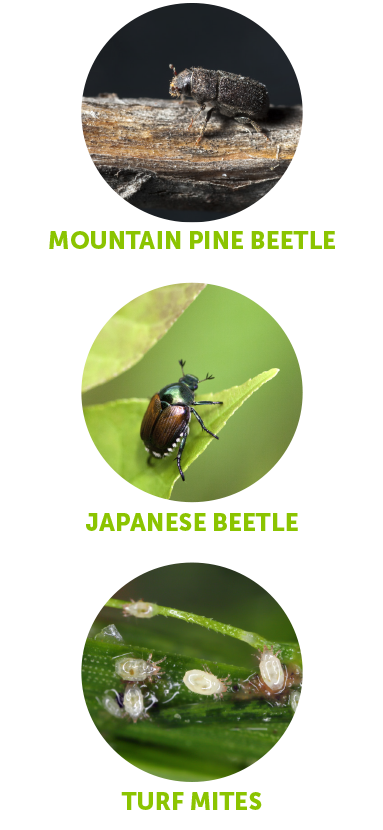
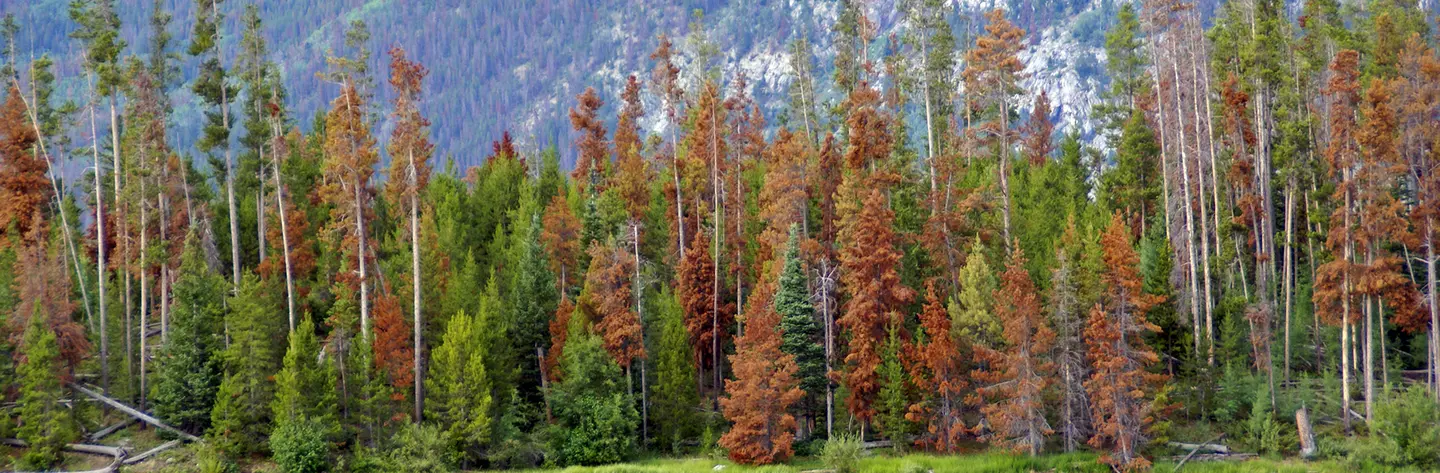
Look for brown, pink, or white popcorn-shaped masses of resin on the trunk. You might also notice boring dust on the trunk or around the base of the tree or exit holes where the beetles emerge. Finally, keep an eye out for foliage that turns yellow or red throughout. This typically occurs within eight to 10 months of an attack.
How can you protect your landscape?
Your best bet is regular inspections and protective trunk sprays, which are most effective when applied before beetle activity peaks. If a tree is already infested, removal is recommended to avoid spreading.
Japanese Beetles
This invasive pest has historically been less common in Colorado and Utah, but populations have recently established themselves in the Front Range and Western Slope communities. Measuring about the size of a coffee bean, the Japanese beetle can be distinguished by its bright metallic green body, darker green legs, and coppery brown wing covers.
Which plants and trees are at risk?
It’s estimated roughly 300 species are impacted by the Japanese Beetle, including roses, Linden trees, Crabapple trees, grapes, Virginia Creeper, hibiscus, and other ornamental flowering plants. The beetle’s larvae (grubs) also can damage Kentucky bluegrass, fescue lawns, and perennial ryegrass turf.
How can you spot an infestation?
Look for holes in buds, flowers, or leaves. In the latter, damage often occurs between leaf veins, creating a lacy appearance. In turfgrasses, look for brown patches, especially in August.
How can you protect your landscape?
Systemic treatments and targeted spray applications for active infestations are the way to go, but because of the vast range of plants affected, there’s no one-size-fits-all approach. That’s why it’s important to work with an experienced landscape partner with licensed applicators who can tailor the treatment to the affected plant, ensuring an effective application with minimal impact to beneficial pollinators.
Turf Mites
This is not a single pest, but rather a collection that includes clover mites, Banks grass mites, and brown wheat mites. All enjoy feeding on your turf and flourish in dry, warm conditions. These microscopic arachnids are especially problematic during early spring through late in the growing season when rain and snowfall have been limited. Though they’re not always visible to the human eye, you may spot tiny moving red or brown specks in the event of an infestation.
What plants are at risk?
Kentucky bluegrass, fine fescues, perennial ryegrass, and buffalograss.
How can you spot an infestation?
Look for irregular brown or straw-colored patches that do not respond to watering alone.
How can you protect your landscape?
Maintaining an effective watering regimen is critical to keeping turf mites at bay. If you do find yourself with an infestation, proper diagnosis is important to receiving treatment with an appropriate insecticide.
Droughts can have a devastating impact on your landscape, but with the right action plan, you can prevent potential damage. Early action is key. Our local experts can design a customized integrated pest management strategy for your property—including systemic applications that prevent infestation and spray treatments to control active pest populations. Schedule your complimentary consultation today.


