Ground Covers: Enhancing Commercial Landscapes

Ground Covers: Enhancing Commercial Landscapes Reducing the natural challenges commercial landscapes encounter
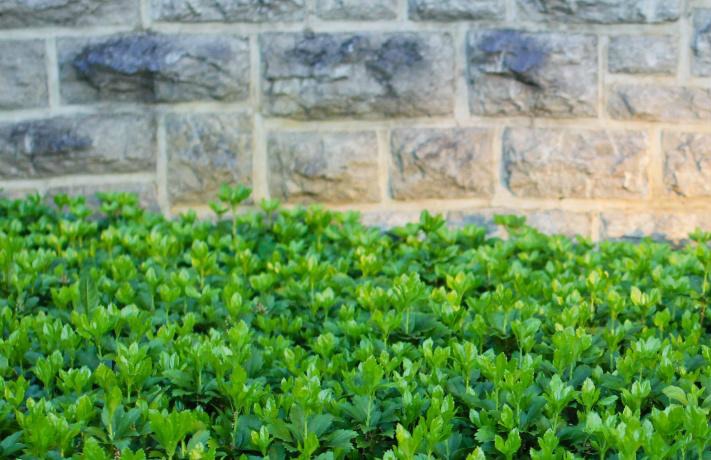
Japanese Spunge
Ground covers have several benefits for your soil, including improving its quality, providing insulation, and preventing erosion.

In the landscaping world, ground covers refer to the typically perennial, low-lying plants that spread and creep across sections of your grounds. They provide visible appeal with minimal maintenance.

Similar to mulch, ground cover plants provide a cost-effective means to cover the soil, creating interest, and finishing the design look of any landscape. These dependable and hardworking plants come in a wide variety of color and texture choices and solve a variety of landscaping challenges.

Ground Cover Contributes to Soil Care

Improves Soil Quality: Ground cover improves the humus levels in the soil. In its simplest description, humus is a slow-release organic fertilizer for your plants that is found in the soil. The more organic matter in the soil, the richer the humus content and the better chances all the plants will thrive.

Provides Soil Insulation: Ground cover plants offer a layer of protection and insulation. In the hot summer months, the plants help maintain the soil's cool temperature, trapping in moisture levels. This can result in less need for supplemental watering and, in turn, saves you money. During the winter months, they help warm the earth, protecting plant roots from the low temperatures in colder seasons.

Prevents Soil Erosion: Perfect for sloping areas or hillsides, some ground cover plants help protect the soil from eroding. They also protect the landscape from soil erosion during high winds and heavy rains.

Evergreens 

Evergreens are by far the most popular type of ground covers and keep their color year-round. They have the ability to turn what could have been a bleak and dead-looking landscape into one that is lush in every season. As a bonus, they require little to no maintenance and grow in a variety of regions, soils, and sun conditions. Ground covers can also help minimize weeds in two ways. First, by covering the soil so that weed seeds have a harder time germinating. Second, once the ground cover matures, weeds are physically suppressed from growing.

As the country’s largest commercial landscape company, BrightView has a vast knowledge of which plants work best in which environments. Discover some of our favorite ground covers and the challenges they overcome below.

Landscaping Challenges

1. Zones

Not all plants are suited to grow in all climates and conditions. So how do you know if the plant you fell in love with will flourish in your landscape? Fear not.

The U.S. Department of Agriculture has created a climate zone map that divides the country by zone boundaries. These zones correlate to the zone recommendations you will find on plants, shrubs, and trees from the growers.

2. Shade
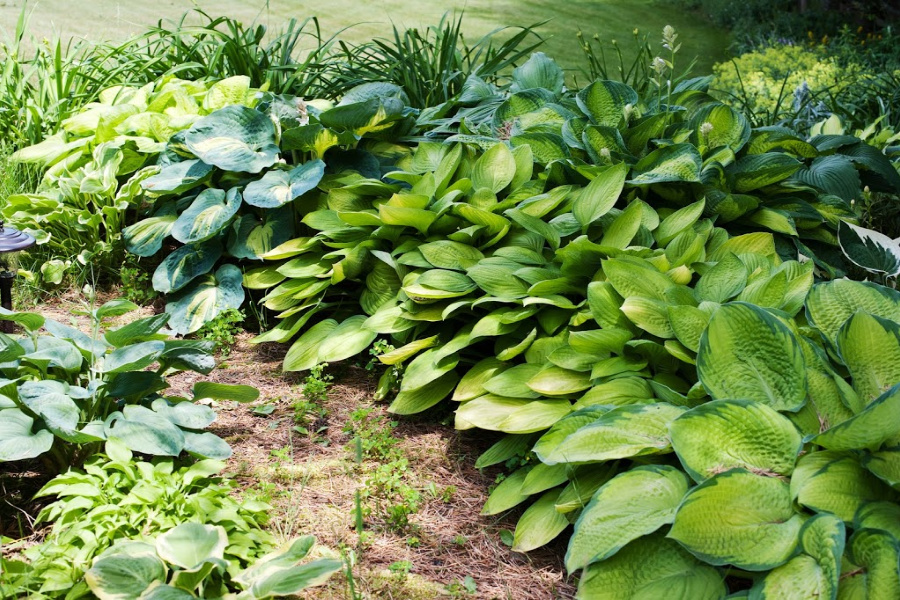
Hosta Ground Cover
Hosta provide an attractive and lush covering, particularly where shade and roots make grass difficult to grow.

Wet, shaded areas of your landscape can often drown out the roots of some plants.

  • Sweet Woodruff: Ideal for Zones 4 to 8, they grow to a height of 6 to 12 inches with a spread of 9 to 18 inches. They flourish in dense shade and are perfect for below trees and shrubs. Their tiny white flowers will bloom in the early spring.
     
  • Bishop's Weed: Ideal for Zones 4 to 9, they grow to a height of 12 inches and have an unlimited spread. This a fast-aggressive plant that comes in a variety of leaf choices, but works well in contained spaces, such as between buildings or a building and sidewalk. It is not evergreen as it does drop leaves in winter.
     
  • Ajuga: Ideal for Zones 3 to 9, they grow to a height of 4 to 9 inches with an unlimited spread. Ajuga aggressively spreads via runners and can tend to be invasive if not controlled properly. It is ideal for large areas, helps to choke out weeds due to its denseness, and is resistant to deer. There is an array of varieties with leaf colors ranging from shades of green, maroon, bronze, purple, pink, or white. Tiny spikes of blue, pink, lavender, or white flowers will bloom on spikes in mid to late spring.
     
  • Lamium: Ideal for Zones 3 to 8, they grow to a height of 6 to 8 inches and spread almost twice as wide. It has a delicate silver-marked foliage that tolerates cold, heat, and drought and is deer resistant.
     
  • Hosta: Ideal for Zones 3 to 8, they grow to varying heights up to 2 feet with a spread from 4 inches up to 6 feet, depending on the variety. Their foliage ranges from forest and lime green to variegated and all white. From May through August, blooms of small white or purple blossoms on top of tall spikes are loved by hummingbirds and bees.
     
  • Brass Buttons: Ideal for Zones 5 to 9, they grow to a height of 3 inches and spread up to 18 inches. They like moist, but well-drained soil. They feature textured, feathery foliage in shades of bronze-black to purple-gray and have small, button-like yellow-green blooms in late spring and early summer.
     
  • Periwinkle: Ideal for Zones 4 to 8, they grow to a height of 3 to 6 inches and trailing vines that grow to 18 inches long. Their blue, lavender, purple, or white flowers bloom in the spring and sometimes have a second, though less spectacular showing in the summer. Incredibly adaptable, they can grow in full sun to full shade, can tolerate drought conditions, and even assist in preventing soil erosion. These almost self-maintaining vines are deer and rabbit resistant and are ignored by most insects.
3. Drought
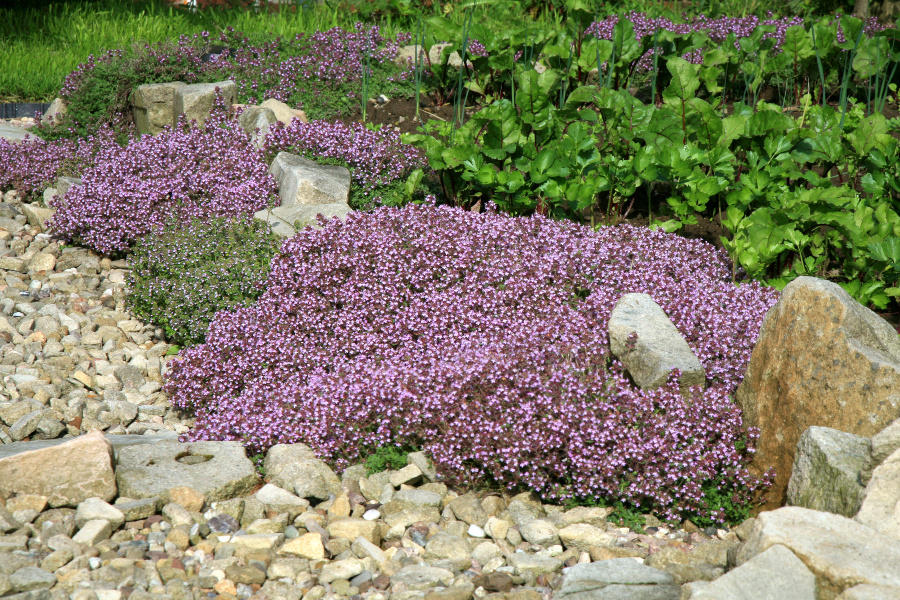
Creeping Thyme Ground Cover
Creeping Thyme is excellent planted as a lawn substitute or among stepping stones or pavers to create a living patio.

If your region doesn't get a lot of rain, that doesn't mean you have to sacrifice colorful foliage. Plenty of ground covers can withstand the heat. Commercial landscapers are turning to drought-resistant plantings more often to preserve natural resources and save on costs. Here are a few of BrightView's favorites.

  • Pink Creeping Myoporum: Ideal for Zones 8 to 9, they grow up to a height and spread of 9 inches. These west coast favorite, low growing shrubs prefer full sun. They are both deer resistant and fire defensible. Their small, white flowers appear in the spring and last through the summer.
     
  • Dragon's Blood Sedum: Ideal for Zones 3 to 10, they grow to a height of 8 inches and spread up to 18 inches. They are super hardy, withstanding a wide range of temperatures and conditions and help to choke out weeds. During the summer, the succulent's leaves are a bright dark green with a burgundy edge. In the fall, those leaves turn to a deep dramatic red that gives the plant its name.
     
  • Creeping Juniper: Ideal for Zones 3 to 10, they grow up to a height of 12 inches and spread as much as 8 feet. The leaves on this low-growing shrub have a blue tint in the warmer months and turn to a purple-red tint in colder months. Due to their spread, they assist in soil erosion.
     
  • Lamb's Ears: Ideal for Zones 4 to 9, they grow to a height of 12- to 18-inches tall and spread as much as 12 inches, depending upon the variety. Growing in full sun or partial shade, they flower in summer with tiny white, pink, purple, violet, or red blooms, but its the fuzzy, silvery-green leaves that are the real attraction of these plants.
     
  • Japanese Spurge: Ideal for Zones 4 to 8, they grow to a height of 6 inches and double that in width. An incredibly tolerant plant, it will grow in partial and/or full shade, drought conditions, and is resistant to pests. While it produces pretty white flowers in the spring, it is grown primarily for its dark, leathery green foliage.
     
  • Creeping Phlox: Ideal for Zones 3 to 9, they grow to a height of 2 to 8 inches and spread from 9 to 24 inches. Preferring partial shade and average soil moisture, they are early spring bloomers with pink, purple, blue, and white star-shaped flowers.
     
  • Nepeta: Ideal for Zones 3 to 8, they grow to a height of 10 to 24 inches and spread up to 24 inches. While flexible in their sun exposure - full sun to part shade - they prefer dry to medium moisture and well-drained soil. Its fuzzy, billowing foliage produces spikes of purple flowers in early summer, which return throughout the season.
     
  • Creeping Thyme: Ideal for Zones 5 to 9, they grow up to 4-inches tall and are slow to spread to their ultimate 36 inches. They prefer moderate climates, but can withstand full sun and drougt-like conditions. Ideal for controlling weeds and repelling deer, they also attract butterflies, honeybees, and other cross pollinators.
     
  • English Ivy: Ideal for Zones 4 to 9, they grow to a height of 6 inches with vines that can reach 24 inches. Incredibly tolerant, it will grow in partial and/or full sun and prefers well-drained soil, but will grow well in any soil condition. It covers the ground so thoroughly that it holds the ground together, presenting soil erosion while choking out the weeds.

Trust the BrightView Professionals

Your commercial landscape team of professionals at BrightView has the experience and knowledge to help you select the right ground cover for your region and property type.
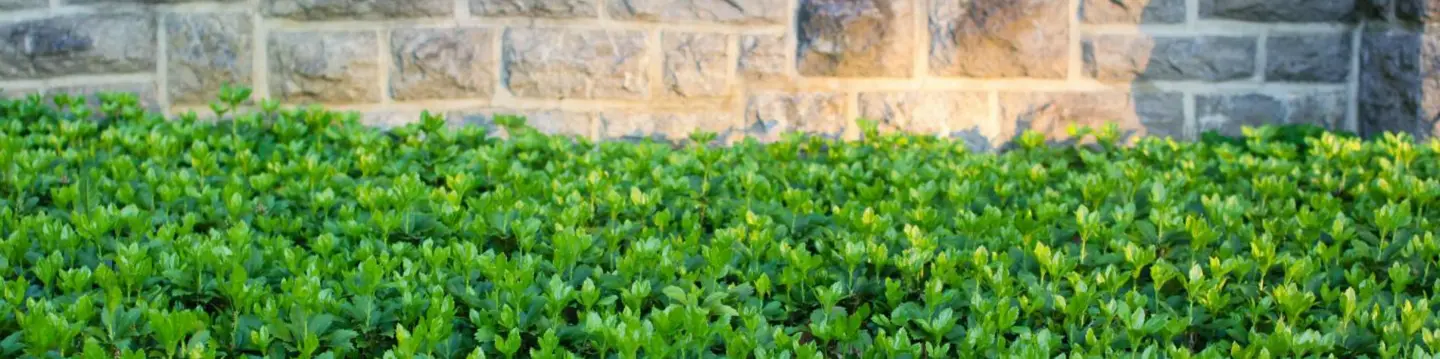
Japanese Spurge ground cover

Experts’ Top Five Ways to Conserve Water on Your Golf Course

Experts’ Top Five Ways to Conserve Water on Your Golf Course We asked our golf course maintenance experts’ for their tried and true water conservation solutions.

Drought, abnormally dry conditions, water restrictions—the last few years have been hard on the golf industry. Undoubtedly, no matter where your course is located, you and your team are working to conserve water. To help you get ahead, we’ve rounded up our golf course maintenance experts’ top five, tried and true, water conservation solutions

1. Do an Irrigation Audit

Before you undertake any water conservation efforts, do an audit of your course’s current water situation. Determine water use per acre and make sure your calculations are correct. Map your irrigation system, noting the efficiency and working order of every nozzle and valve. Adjust nozzles and water pressure as necessary, ensure your irrigation system’s programming reflects the changes and plan to address any deficiencies.

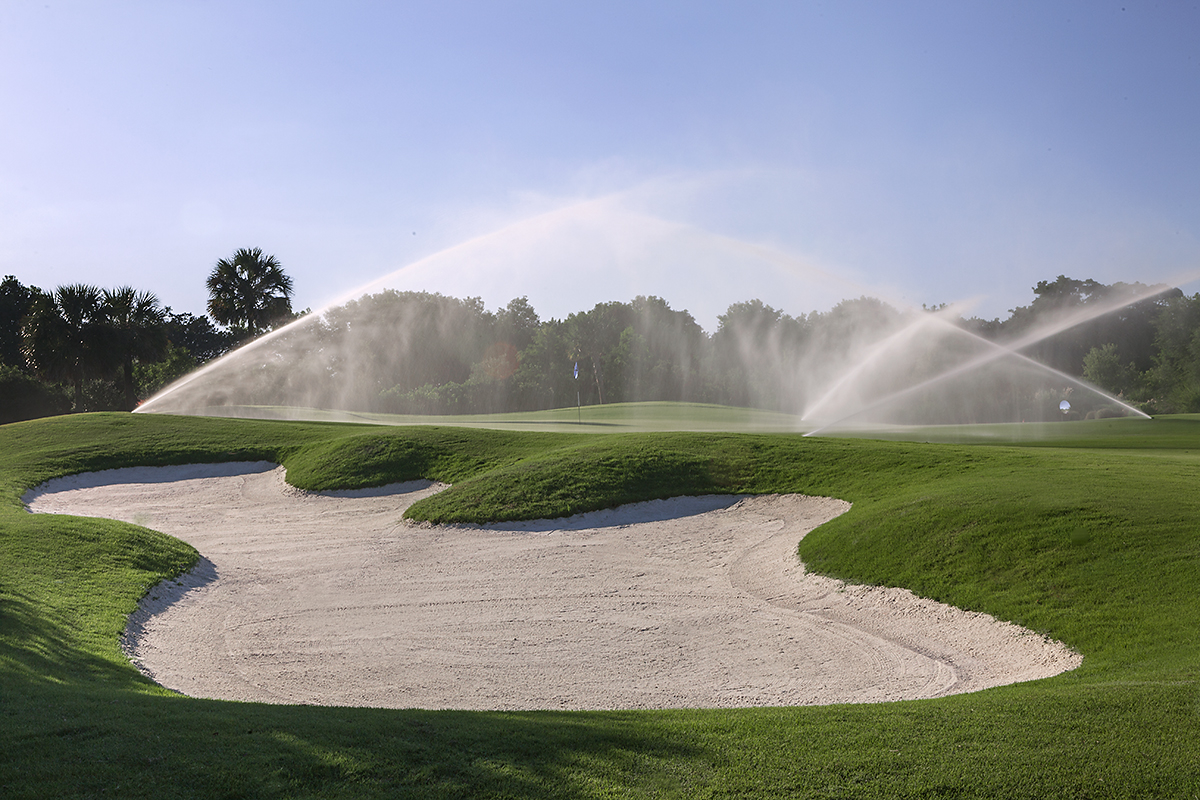
According to Ted Horton, BrightView’s Senior Consulting Superintendent, a comprehensive water audit and regularly scheduled maintenance of irrigation systems can reduce annual water usage on a golf course by about 5 to 10 percent.

sprinklers on a golf course
Ready to cut your course's water usage? According to our experts, the first step is an irrigation audit.

2. Revisit Your Course’s Cultural and Maintenance Practices

Though it may seem obvious, it’s important to know the water needs of your plants in order to understand how and where to prioritize water use. Once you know that, you can consider adjusting cultural practices to save water. For instance, studies have shown plant growth regulators can cut down on water use by about 11 percent per year. Using wetting agents or soil penetrants also helps ensure the water you are using will be readily absorbed into root systems.

There are other simple steps you can take to help conservation efforts. Make sure your mower blades are sharp and reduce the height of the cut in the rough. You can also aerate and reduce soil compaction to allow water to infiltrate more efficiently. Consider hand watering instead of turning on irrigation heads and wash equipment with pressurized air rather than water. Don’t skip routine golf course maintenance practices. Aeration, sand topdressing, verticutting and a good fertility management program assist with soil compaction and allow for better moisture penetration, saving water usage in the long-term.

3. Use Soil Moisture Sensors

If you’re not already doing so, add soil moisture sensors to your golf course maintenance toolkit. Far more efficient and affordable than in the past, these sensors measure moisture content in turf and enable you to dial in irrigation efforts.

Mike Huck, a water quality and conservation specialist who consults at golf courses nationally, compared good soil moisture sensors to gas gauges. “The information these sensors provide is real time and exact,” he said. “It’s not based on opinion or a guess about the weather.”

Huck told of one Arizona golf client who, following information provided by soil moisture sensors in his turf, turned off irrigation in one zone one night per week. The savings amounted to half a million gallons of water per night.

“His turf didn’t suffer at all,” said Huck. “And over the course of a month, the amount of water and money saved was pretty significant.”

4. Plant Drought Tolerant Turf and/or Consider Turf Conversion

By far one of the most impactful ways to conserve water is through turf reduction and conversion projects. Kevin Neal, BrightView Vice President and Area Director for the West, has seen clubs take several approaches, including installing artificial turf on driving ranges, planting drought tolerant landscaping around bunkers, and converting turf from cool to warm season grasses.

“Just going from something like Rye grass to Bermuda grass can cut water use by as much as 15 percent,” said Neal. However, as Neal points out, planting a warm season grass that goes dormant in the winter requires a mind shift among clubs and players alike.

“People are getting used to not seeing green grass all the time,” said Neal. “But the reasons behind any turf conversion project need to be communicated clearly so that everyone can get behind and support the decision.”

5. Explore Alternative Water Sources

Being smart about water conservation means being aware of all water sources around you. Alternative sources to consider include wells, ponds, lakes, rivers and streams. Find out about recycled water opportunities in your area. For example, if sewer lines can be tapped into and skimmed, find out how you can do this and whether you can secure this resource for future use.

“Only 30 percent of golf courses are not using potable water, which means a lot still are,” said Ted Horton. “With water becoming ever scarcer, we all need to look at how we are using this precious resource. It’s up to all of us to use water as carefully and efficiently as possible.”

Golf Course Maintenance
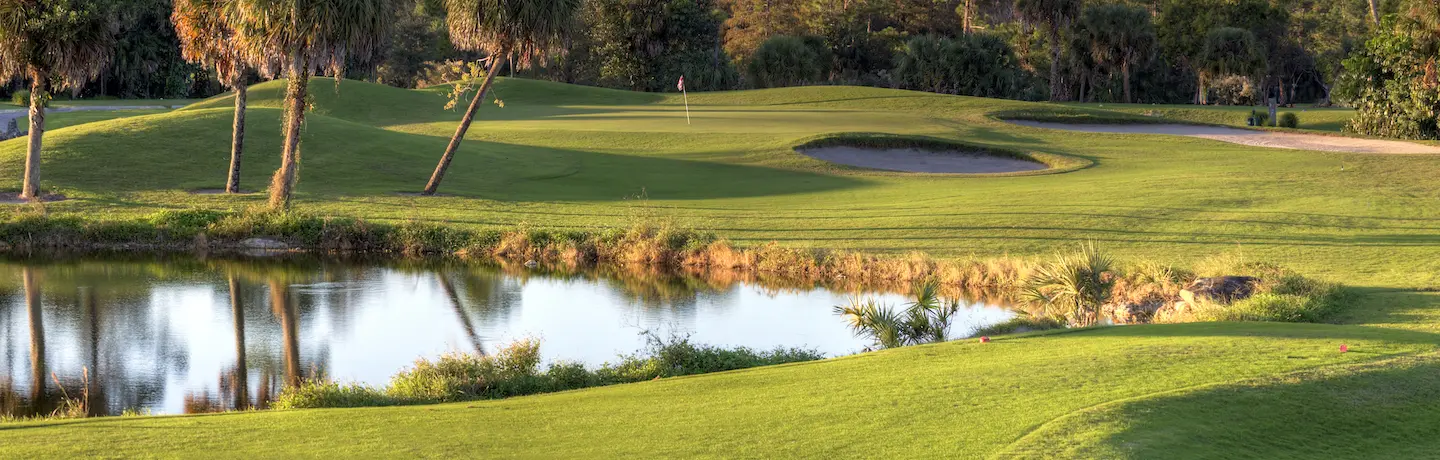
water hazard on a golf course

3 Reasons to Use Drought-Tolerant or Native Plants

3 Reasons to Use Drought-Tolerant or Native Plants Native or drought-tolerant plants will save you time and money by needing less water to survive
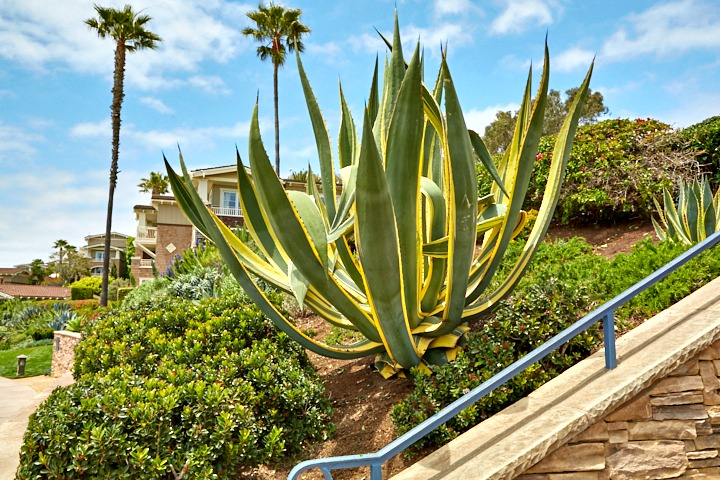
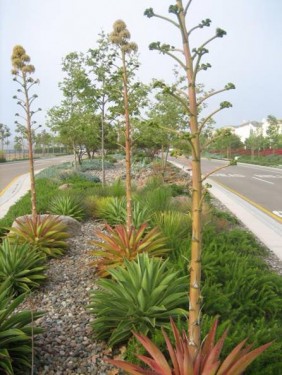
Agave drought-tolerant plant
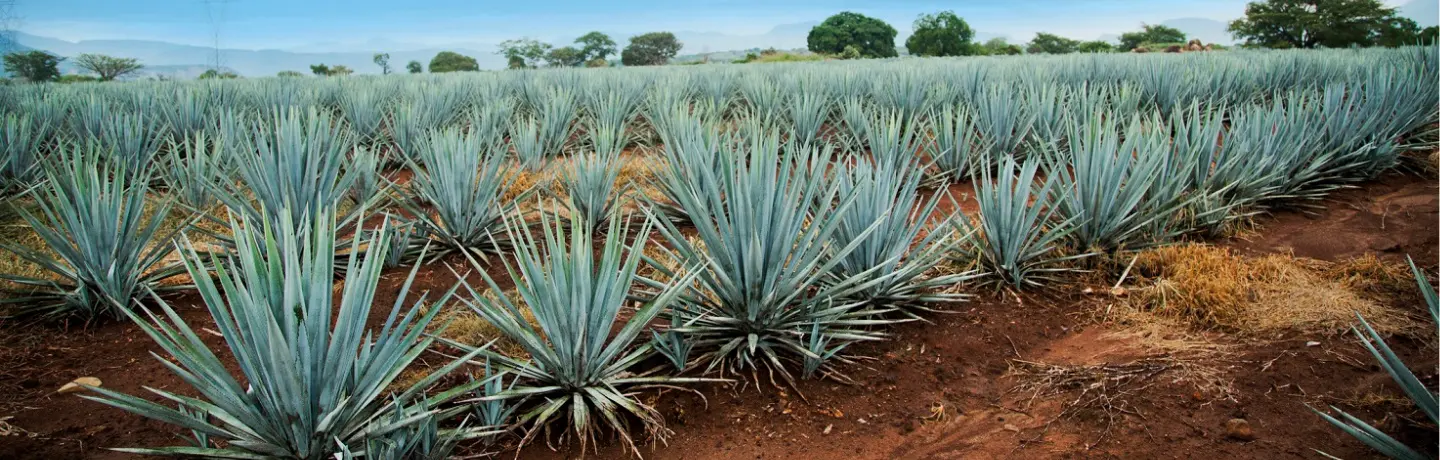
Agave plants look great in a landscape and require minimal irrigation.

A native plant is one occurring naturally, in a given geography, without human involvement. These are the plants growing on the landscape without the aid of humans. A drought-tolerant plant, on the other hand, is not necessarily native to the area, but can survive in your landscape with less than normal amounts of rainfall. There are three main reasons to use these two types of plants in your landscape.

1. Less Water

Because drought-tolerant plants have adapted to dryer climates and have lower water requirements, they naturally use less water. Although native plants are not necessarily drought tolerant, once established, they usually require minimal supplemental irrigation. Agave plants are a great example of a plant that looks beautiful and requires minimal irrigation. However, you should always research your geography requirements to make sure you are using the right native plants.

2. Lower Maintenance 

Not only can you look forward to using less water with native plants, but because these plants have adapted to their environment, you can also spend less time fertilizing, pruning, and caring for them in general. Most likely, you can maintain a beautiful garden by only spending a little time with them each month. Drought-tolerant plants tend to be more disease-free and pest-resistant so you can spend less time on fertilization.

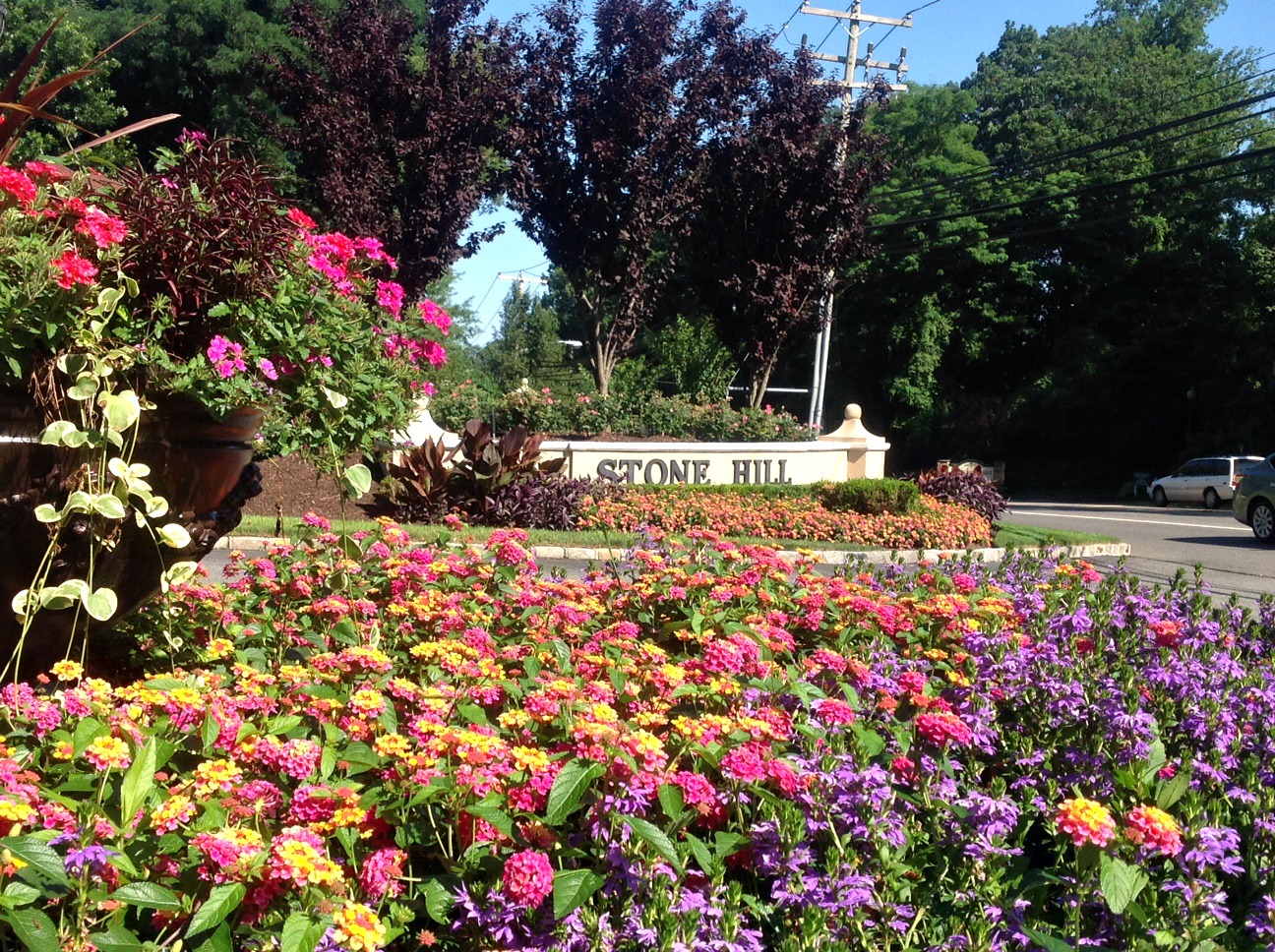
Lantanas drought-tolerant plant
Lantanas add beauty without requiring a lot of water.

3. More Beauty

Drought-tolerant landscapes do not have to mean cactus, succulents, and rocks. Well designed, drought-tolerant landscapes can look attractive all year long. Even when using drought-tolerant and native plants, you can have an abundance of color in your landscape. Colorful plants, such as lantana, verbena, and agastache, will add beauty without requiring a lot of water. Houzz has some great examples of colorful, drought-tolerant landscapes.

Choosing the right plants for the right place is one of the most important considerations for all types of landscaping. Careful planning and completing a thorough evaluation of your landscape is an important first step when designing a new space. Drought-tolerant and native plants can help you avoid a costly landscape which looks unhealthy.

Water Management
Benefits of Drought Tolerant Plants

Top Drought Tolerant Plants for California

Top Drought Tolerant Plants for California Tree, shrub, groundcover selections to make the make the most of any California based landscaping project

Landscapers are increasingly turning to drought-tolerant landscaping as a way to preserve resources and save costs. With the increasing frequency of wildfires in California, the need to conserve water is even more critical. Here is a list of some top choices for drought-tolerant trees and shrubs for Northern and Southern California for front yard landscaping, public areas, and landscaping for graded/sloped areas.

Top Drought-Tolerant Plants for Front Yard Landscaping in California

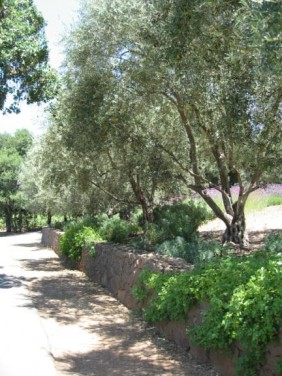
Myoporum and olive trees
The yellow-green of Myoporum, a water-wise lawn substitute, sets off the silvery tones of olive trees.

There are a few basic things to consider when selecting plants for the front yard:

  • Choose plants that stay contained and compact; unwieldy and woody plants make a yard feel small and less tidy.

  • Go for plants that will please year-round, such as evergreens or deciduous plants and trees with good branching structures.

  • Consider varied texture and color. Mix grass and agave (fine vs. bold) or blend green and variegated plants.

  • Go with plants that echo the architecture, i.e. Spanish vs. Cottage.

Northern California

Trees

  • Redbud: This thrifty water-user produces brilliant spring blossoms.

  • Tabebuia: Sometimes called pink or golden trumpet trees because of its trumpet-shaped blossoms.

  • Arbutus 'marina:' This is a broadleaf evergreen tree which requires minimal care.

Shrubs and Groundcover

  • Myoporum 'pink' (as a lawn substitute): This is a deer-resistant groundcover which grows in sun or shade and produces tiny, pink flowers in the summer.

  • Callistemon 'Little John:' A mid-sized, red flowering evergreen shrub.

  • Coffeeberry: Member of the buckthorn family with shiny, dark leaves and reddish berries.
Yucca and Agave Plants
Yucca geminflora and Agave desmettiana add a sculptural note against the softness of rosemary.

Southern California

Trees

  • Olea 'wilsonii:' This is a fruitless olive tree with no mess.

  • Carolina laurel: Producing deep green foliage, this is a spring-flowering tree.

  • Rhus lancea: Commonly called African sumac, its an evergreen with sword-shaped leaves.

Shrubs and Groundcover

  • Sedges and Salvias: These both add color to the landscape and are pollinators.

  • Agave: Tough-as-nails and adds nice texture and contrast.

  • Dymondia (as a lawn substitute): This groundcover, often refered to as mini-gazania, grows flat to the ground.

Top Drought-Tolerant Plants for Public Space Landscaping in California

It goes without saying that public space landscapes need to be hardy, but these spaces also need to be an attractive visual endorsement for the commercial or pubic property they surround. Public space landscaping also requires higher maintenance, so keep these things in mind:

  • Choose plants which can withstand heavy traffic.

  • Consider the plant's year-round appeal.

  • Select plants with high visual interest; plants with showy foliage, such as succulents and purple grasses, or plants with showy bark, such as Manzanitas and Arbutus.

Northern California

Trees

  • Desert Willow: Called a "willow" because of the shape of the leaves. It is related to the Catalpa.

  • Acacia aneura: This tree is commonly known as "mulga," or "true mulga."

  • Citrus: These trees take a lot of specific nutrients, but not a lot of water.

Shrubs and Groundcover

  • Lamb's Ears: This plant is soft and velvety in texture and deer-resistant.

  • Groundcover roses: Baby Blanket or the ever-hardy White Meidiland are great groundcover options.

  • Bioswale plants such as Juncus and Carex: Perfect for use in low points within the landscape to help clean the rain runoff before it enters streams and the ocean.
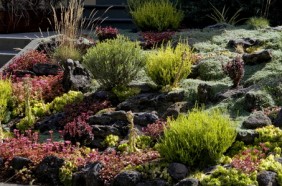
Dragons Blood Sedum
A colorful and drought-tolerant groundcover pair: Dragon’s Blood Sedum with shrubs of Dymondia Omit Heath.

Southern California

Trees

  • California Bay: These large hardwood trees native to California's coastal forests.

  • Catalina Cherry: Evergreen that produces red berries and showy, white flowers in the spring.

  • Crape Myrtle: Blooming mid- to late summer, this tree comes in various shades of pink.

Shrubs and Groundcover

  • Ribes: The genus contains about 150 species, several of which are native to California.

  • Achillea: Also known as yarrow, legend has it that it was gifted to the war hero, Achilles, by the Olympian gods to help quell the bleeding of his soldiers during the Trojan War.

  • Fremontodendron: Best time to plant is late autumn.

Top Drought-Tolerant Plants for Graded/Slope Landscaping in California

Most of the remaining developable land in California is located on hillsides and landscaping such sites takes careful consideration. In addition, much of this land borders natural open spaces, so planting native allows the area to regenerate and flow seamlessly into neighboring areas while also conserving valuable water resources. Think about these basic factors when developing graded landscapes or slopes:

  • If exposure to wildfires is an issue, plant the most fire-resistant plants closest to structures and emanate outward.

  • If possible, convert the area back to native plants. It saves money, water, and the maintenance associated with more exotic landscapes.

  • Think about tighter spacing and more showy plants to enhance trail edges and parkways.

Northern California

Trees

  • Oaks: Valley Oaks and Coast Live Oaks are able to withstand the long, dry summers of California. It is best to plant oaks young as any major change in its environment can weaken or kill it, no matter how healthy it is.

  • Redwoods: A California icon, it is adaptable to most soil conditions. Word to the wise: these are very fast-growing trees, so plant with that in mind.

  • California Christmas Tree: Also known as Deodar Cedar. Allow plenty of room around these fast-growing trees to best display its stately shape.

Shrubs and Groundcover

  • Ceanothus: This plant composes about 50 to 60 species. Try Ceanothus Yankee point and Concha.

  • Manzanitas: There are lots of varieties of these shrubs that work well in cooler climates.

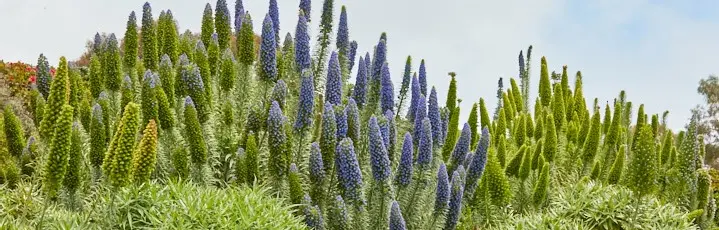
  • Echium: "Pride of Madera" is the common name. This plant is very showy and tough.

  • Encelia californica: This shrub is commonly referred to as "California bush sunflower."

Southern California

Trees

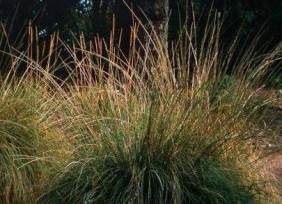
Deer Grass
Muhlenbergia rigens (deer grass) is a striking and water-efficient way to add shape to a landscape.
  • Native Walnut varieties: Juglans nigra, also known as Black Walnut, originated in Persia, but thrive in Southern California's dry conditions.

  • Oaks: There are over 20 species of native California oaks, from shrubby species which only grow a few feet to the mighty oak trees. Many species of native oaks are not regenerating adequately in California, which in turn threatens the oak forests themselves and the wildlife that use them as resources.

  • Sycamore (plant at base of slopes): This is one of the largest hardwood trees. It's great for shade.

Shrubs and Groundcover

  • Baccharis: This plant is in the aster family It is sometimes referred to as "brooms" because of the plant's small, thin leaves.

  • Acacia: Named by Swedish botanist Carl Linnaeus after the African species Acacia nilotica.

  • Yucca or Opuntias: These are great for adding focal points and sculptural shapes.

  • Deer Grass: Grows in dense clumps with spiky flower stalks and creates striking forms in a landscape.
Maintenance
Agave - Drought Tolerant Plants of CA

5 Reasons Why Your Drought Tolerant, Native Plants Died

5 Reasons Why Your Drought Tolerant, Native Plants Died Sometimes plants die, but there is usually a reason

After making an effort to conserve water and be environmentally friendly, did you have the unfortunate experience of losing your new drought tolerant, native plants? 

Here are five reasons why your drought tolerant, native plants likely died:

Dying plant drought tolerant native
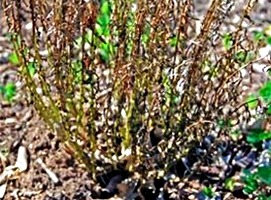
A plant with insufficient water will be crispy while the leaf of a plant with too much water will be moist.

Fact: All Plants Need Some Water

Your plants may be drought tolerant, but unless they are petroleum based (plastic), silk, or preserved, they are still going to need some water.

Fact: All Plants Need More Water When They are First Planted

Established plants require less water than newly installed plants and irrigation systems are often “dialed back” for the established plants to conserve water. Since new plants are often added around the current plants, irrigation cycles for existing plants may not provide enough water for the new plants to establish themselves. Before you increase your irrigation, continue reading as too much water can be a problem as well. 

Fact: Too Much Water Will Kill a Drought Tolerant, Native Plant

Most people tend to overwater, especially when they see a plant wilting. Did you know a plant will also “wilt” when overwatered? The difference is in the leaf: a plant with insufficient water will be crispy while the leaf of a plant with too much water will be moist. Here are some other ways to find out if you are overwatering your plants.

Fact: Not All Native Plants are Meant to be Planted Wherever

As we say in the landscape business, “Right Plant, Right Place.” Before you place a new native plant, find out where the plant is found in nature. Does it like the sun or shade? Does it prefer moist conditions? Salt tolerance is important if you live near the coast or irrigate with reclaimed water (especially with drip irrigation). The soil type makes a difference as some plants like high organic content, which may not exist in your landscape if your topsoil was removed during construction in the last 10 to 15 years.

Fact: Sometimes Plants Die ― Even Drought Tolerant, Native Plants

Sometimes your plants die, but there is usually a  core reason. 

Your newly installed plants can have a higher mortality rate due to transplant shock, which is one reason why companies and nurseries have a warranty on their plants.

Once your new plant is established, Mother Nature takes over. Critters (insects, rodents, dogs, etc.) will suck, chew, or urinate on your plants, resulting in its death. Diseases require very specific conditions and can come and go, but when the micro climate is optimal, a disease can become a major problem. The good news is that only specific species are usually victimized.

Some plants will just die of old age. How many years does a plant live? It depends on the plant. As a general rule, trees live longer than shrubs, which live longer than perennials. Annuals are usually just for show or seasonal agriculture.

Often, a combination of reasons will result in your plant’s death. A primary issue may weaken your plant and cause a chain reaction with one problem leading to another.


Maintenance

Smart Alternatives for Water-Thirsty Turf

Smart Alternatives for Water-Thirsty Turf Convert your turf, save water, and create a beautiful landscape

Whether you're located in areas where drought has taken its toll or you're just looking to create a more sustainable landscape, replacing turf with less water-intensive alternatives is smart. To help jumpstart your thinking, we've gathered some water-wise options — from easy to more elaborate — for turf conversion projects.

Plant Xeriscape-Friendly Shrubs

Removing turf completely and replacing it with clusters of low-water-use shrubs, such as Abelia, Phormium, Coleonema, Nandina's, and Oleanders, can be an attractive option. Of course, when choosing among these drought-tolerant plants, consider how they'll blend in with your existing landscape and whether the finished look jibes with your long-term vision for your property. You don't want the area to look like an ill-planned patch job, so take the time to think about this.

Extend Existing Shrubbery to Replace Turf

If it works aesthetically with your landscape, you could remove the turf and simply extend surrounding or adjacent shrub beds with similar plantings. The only downside to this alternative is if the shrubbery you're extending isn't water wise. In that case, this might not gain you better water management or a very updated look.

Blend Xeriscape-Friendly Shrubs with Existing Shrubbery

Mixing it up is a smart transitional approach. Go ahead and remove the turf and extend the existing shrubbery while adding in some low water-use shrubs into the mix. This is an appealing option as it updates tired, worn-out shrubbery that has grown woody and scores points for smart water management.

Convert the Space by Adding Hardscape

Finally, one of the smartest moves in terms of water management is to think long-term and incorporate decomposed granite, cobblestone, or some kind of decorative paver or stone, as well as drought-tolerant plantings, into the area you're rehabbing.

Obviously you'll want to consider the surroundings, traffic patterns, and your overall landscape before doing this. But if this move is simpatico with your landscape, it's a water efficient and attractive choice. It's also the costliest, but money spent on this project could be savings gained in terms of water use and increased property value.

Consider Changing to Drip Irrigation

While you’re converting your turf, you might also consider removing overhead spray or rotor sprinklers and replacing them with drip irrigation. Depending on the area you're renovating and the existing configuration for your landscape and irrigation system, this could be challenging. But if your budget allows it and the change will work, the water cost savings could be worth it.

Help Fund Your Project with Rebates

When undertaking turf conversion projects, it pays to check with your local water authority to see if your project qualifies for any of the cash-for-grass rebate programs. Typically these programs require that you replace grass with qualified low water-use plants and xeriscaping. Every rebate program differs, so check in with your local water authority before undertaking any extensive turf replacement work.

The Right Thing for Your Budget and the Planet

Replacing green lawn with low water-use plants and/or hardscaping doesn't have to be an aesthetic sacrifice. As noted above, there are lots of ways to go about it and the results can help to modernize your landscape, reduce long-term maintenance costs, and, done well, increase your property value. 

Water Management
Smart Water Alternatives
Subscribe to Drought