
Beware of Bark Beetles
How to Prevent This Tough Pest



Bark beetles have the unique (dis)honor of being one of the most destructive forest pests in the world. Small but mighty, they work in teams to attack your most valuable trees. And while they might be hard to see, the damage is hard to miss. Here’s what you need to know to prevent a band of these miniature wrecking balls from taking up residence on your property.
How to Identify the Bark Beetle
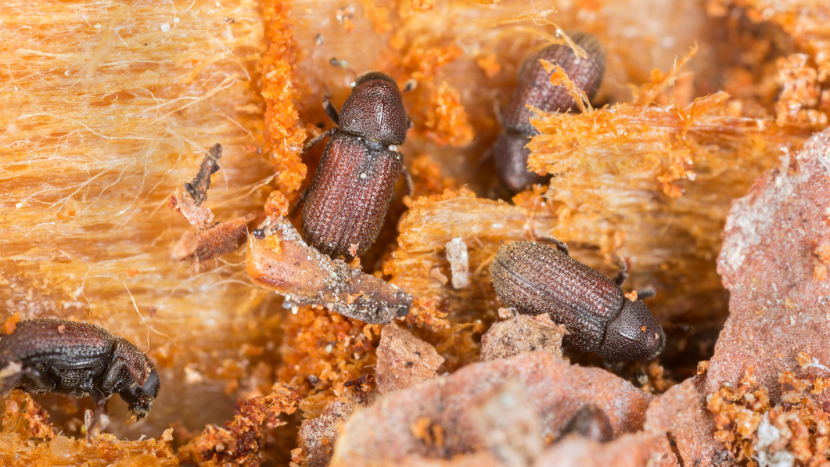
Get out your magnifying glass, because the average bark beetle is no bigger than the head of a match. Worse, you may have trouble telling them apart unless you’re an entomologist. The University of California estimates there are more than 600 species in the United States and many look similar. Generally, bark beetles measure roughly 1/8” long, have short antennae, and are red, brown, or black in color. In the larvae stage, they’re white grubs with brown heads.
Are Your Trees at Risk?
Bark beetles have a wide range of tastes. Some will attack a variety of tree species, while others prefer specific types. Pine, spruce, fir, and cedar are popular targets, but with so many different types of bark beetles, that list only scratches the surface. One thing is for certain: stressed trees are always more susceptible. Their weakened defenses make it difficult to fight off the beetles’ attack, especially as more arrive and colonize the tree.
What Do Bark Beetles Do?
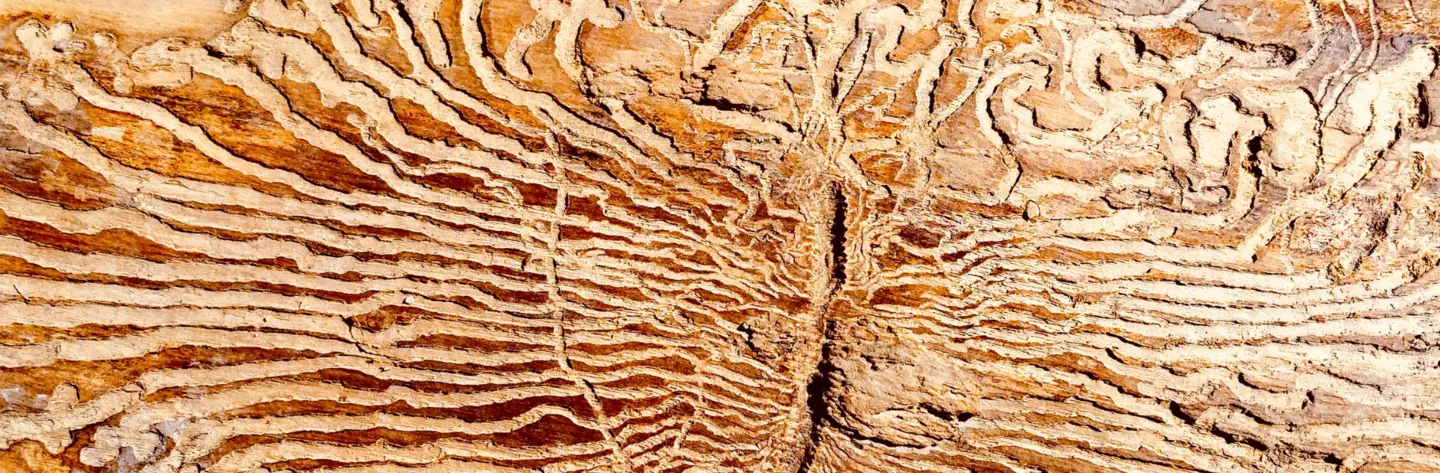
Individually bark beetles can’t cause much damage, but in large numbers, they quickly become a lethal force. Bark beetles send out pioneer beetles like scouts to search for weakened trees that would serve as a good host. When they find one, they bore into the bark and emit a chemical signal that attracts their fellow bark beetles to the site. Once they arrive, they, too, bore into the tree, creating a series of chambers to lay eggs. After the eggs hatch, the larvae feed outward, girdling the tree and impairing nutrient transport. Worse, many beetles carry a fungus that inhibits the tree’s water uptake, further hastening the host’s demise.
What are the Signs of Bark Beetle Infestation?
One of the most prominent signs of bark beetle infestation is crown fading. This can appear as light-green, yellow, brown, or even red leaves. In some cases, the discoloration may be delayed by cold weather, meaning an attack that happens in the fall may not be apparent until the following summer.
You may also notice frass, which is the excrement the beetles leave in their wake. It looks a lot like sawdust and will be present around the crevices where the beetles entered. Pitch tubes are also a telling sign of distress. These resin deposits are produced by the tree as an attempt to defend against invasion. And finally, if you notice exit holes in a shotgun-like pattern, that’s another sign it’s time to call a certified arborist. Even if the infestation is too advanced to save the tree, the arborist and their team can ensure the tree is disposed of properly to avoid the beetles finding another host on your property.
How Can You Prevent Bark Beetle Infestations?
As previously mentioned, reducing stress on your trees is one of the best ways to protect against bark beetles. Regular watering, fertilization, pruning and inspection by a certified arborist go a long way towards bolstering your tree’s defenses. In the event you’re installing new trees, you may also want to consider the diversity of your plantings. Given that some bark beetles have a preference for certain varieties of trees, avoiding blocks of identical species can be beneficial.
Most importantly, be sure to stay on top of preventative treatment. Once girdling has occurred, there’s no way to save the tree. A well-timed insecticide application in spring or early summer will thwart attack. Your certified arborist can put in a place a plan that ensures regular treatments are seamless, so it’s one less thing you have to remember.
Don’t have a certified arborist yet? Give us a call. We can connect you with one of our knowledgeable local tree care teams. And while you’re at it, be sure to sign up for our Dig Into series for more important tips like these delivered straight to your inbox.


