
Bringing the FIFA World Cup to SoFi Stadium
BrightView helps create the field for the world’s biggest tournament



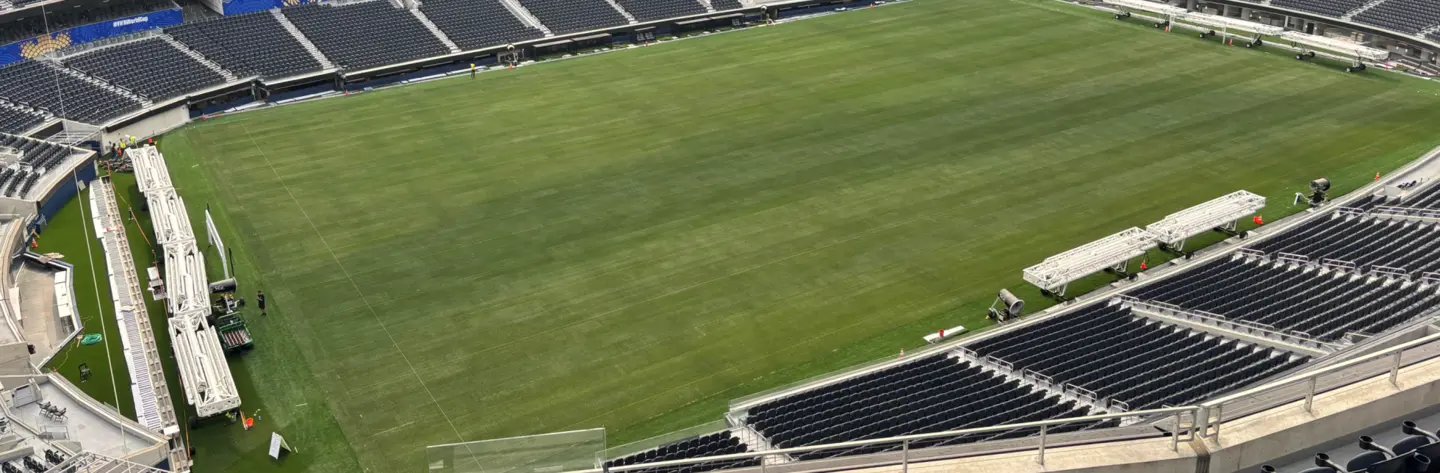
As the United States celebrates its 250th anniversary this summer, millions will turn their attention to the FIFA World Cup taking place across North America. At SoFi Stadium in Los Angeles, where some of the tournament’s biggest moments are sure to unfold, a world-class playing surface stands as a result of years of planning, problem-solving, and teamwork by BrightView and its project partners.
The road to the FIFA World Cup at SoFi Stadium began in early 2025 when the venue converted its synthetic football field into a natural grass surface for the Concacaf Nations League. That project served as a starting point for the team, but with FIFA’s extended pitch dimensions, it required a far more ambitious second build, and one that reshaped nearly every element of the field.
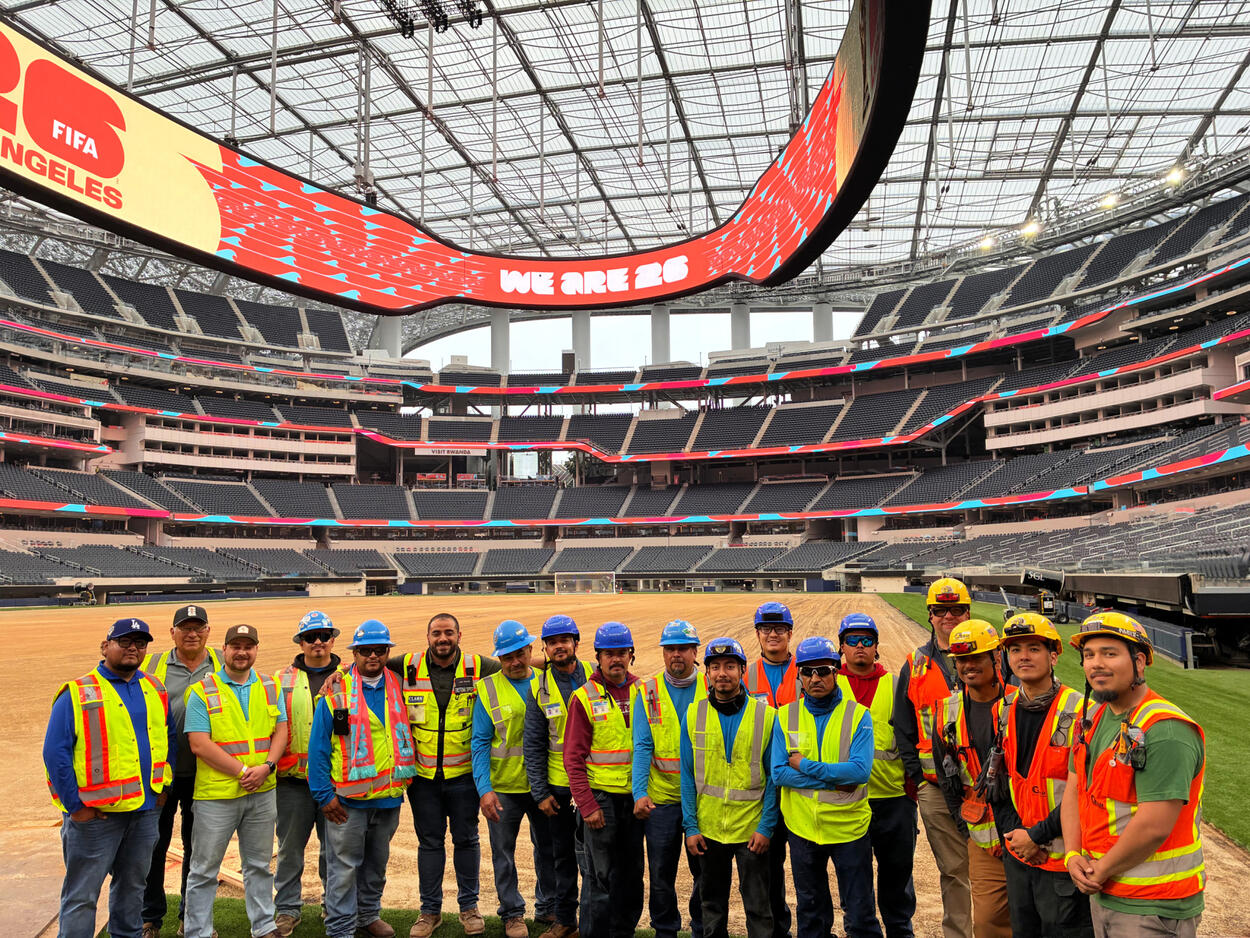
“The Nations League build gave us a strong foundation, but the World Cup challenged us to elevate every aspect of the project,” said Liam Ahler, BrightView Sports Construction Project Manager. “It took an incredible amount of coordination between BrightView, Clark Construction, Lloyd Engineering, SoFi Stadium, Hollywood Park, and our other partners to deliver a field that meets FIFA’s standards while working within the unique constraints of the venue.”
The stadium—currently called Los Angeles Stadium for the World Cup—presented a unique challenge for Ahler and his team. Built on a concrete slab with no original drainage system, the venue was designed for a synthetic field beneath a translucent roof, where subsurface drainage was not required. With FIFA’s natural grass mandate, a new solution was needed to manage water effectively.
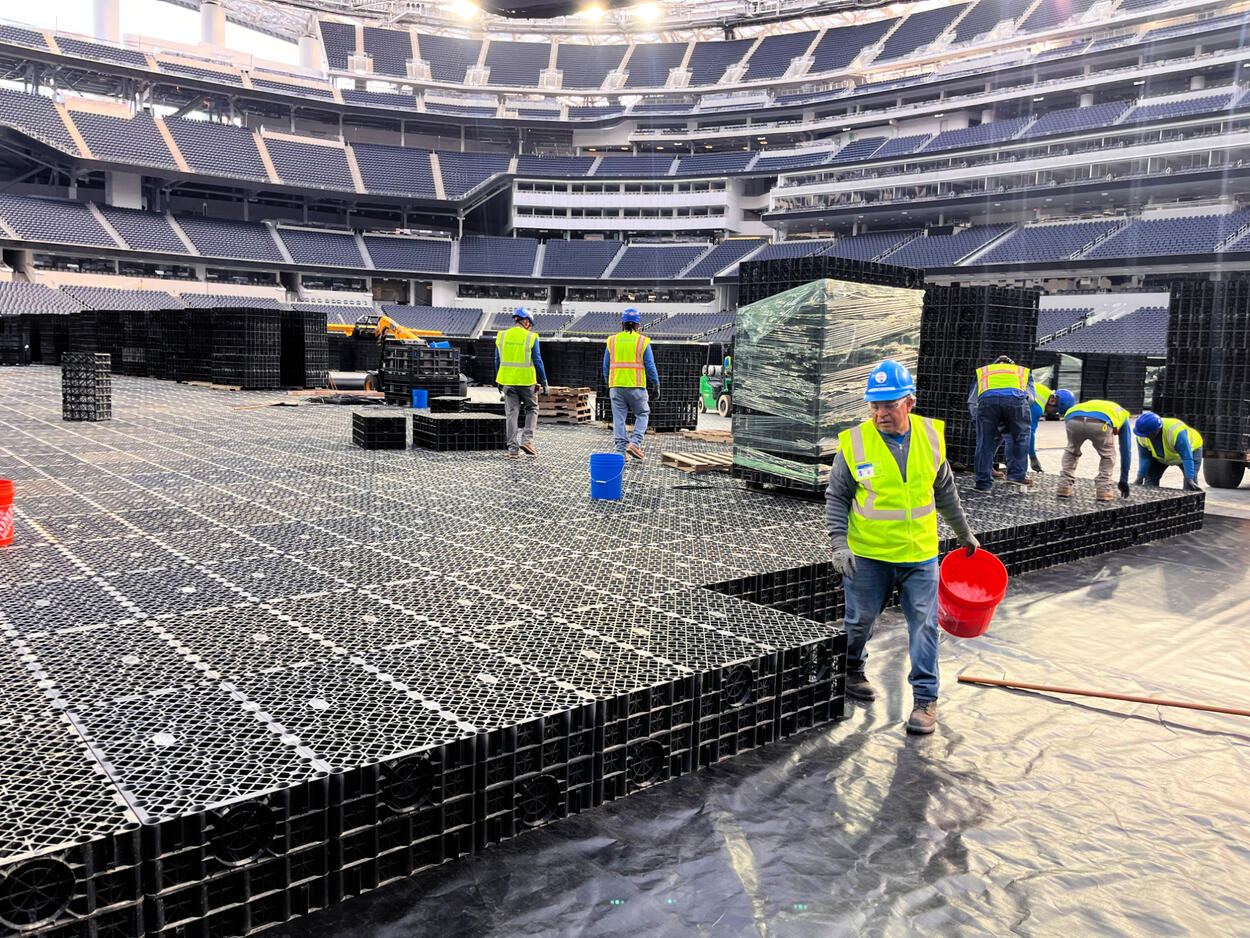
Working alongside Clark Construction and BrightView’s local branches, the team installed a fully-sealed “bathtub” system using an impermeable liner to contain the field. This structure allows water to be carefully managed and pulled through the field surface and preventing it from reaching the ground-level suites below.
“Most grass fields are built with drainage in mind from day one, but that wasn’t the case here,” Ahler said. “We were essentially creating a complete water-management system inside a stadium that was originally designed for synthetic turf. The irrigation and work happening below the grass is what makes it possible for the field to thrive in a venue that was never originally designed for it.”
For the field build itself, the playing surface is composed of several layers, beginning with a Permavoid drainage layer and filter fabric, followed by more than 6 inches of a custom-blended rootzone sand, and topped with a Kentucky Bluegrass and Perennial Ryegrass blend sod supplied by Desert Green.
The sod selection was driven by the stadium’s unique translucent roof. The structure allows for natural light to filter through, it doesn’t provide enough sunlight to support warm season grasses. After conducting light studies, the team determined the cool season blend would perform better. The findings not only influenced the turf selection, but also shaped the specialized maintenance program that will be used to keep the field healthy and tournament-ready throughout the World Cup.
“Every adjustment made had a ripple effect,” Ahler said. “There was no playbook for a project of this scale. We were constantly evaluating conditions, adapting plans, and working through challenges as they emerged. It was one of the most demanding projects I’ve ever been a part of, but also one of the most rewarding.”
Through all the difficulties and curveballs thrown at the team, it became a true embodiment of collaboration between all the project partners, and also within BrightView itself. At most, more than 50 BrightView team members worked at the venue, including Cesar Hernandez and his Los Angeles team.
“What makes this job so special is seeing One BrightView come to life,” Ahler said. “Everyone was working together between our divisions and local branches, all pushing in the same direction to make this field spectacular.”
Now, as the stadium prepares to host its first World Cup match on June 12, the field stands ready. As fans flood the venue and millions tune in from around the world, the field will serve as a lasting reminder of the innovation, craftsmanship, and collaboration that made the seemingly impossible possible.
“You’re growing grass in a stadium that wasn’t originally designed for it, under global scrutiny, with no natural drainage, and a roof that dictates your light environment,” said Murray Cook, President of BrightView Sports Turf. “The only way it works is precision. Every layer and every decision has to be right the first time, and our team achieved it to the highest level.”
For more information and/or permission to use BrightView images and assets, please send all media inquiries to [email protected]


Facilities that Excel
Beyond giving your athletes the ideal playing venue, well-maintained sports fields ensure safety and improve the aesthetics of your property. Find out why leading schools, major and minor league teams, and Olympic coordinators team with us.