

Newly Seeded or Newly Sodded?
Dig Into... How to care for a new lawn



You got a new lawn? Congratulations! Now, let’s get down to the business of keeping it alive and helping it thrive. Whether it’s newly seeded or newly sodded, read on for the steps you need to make your green investment a healthy and lush success.
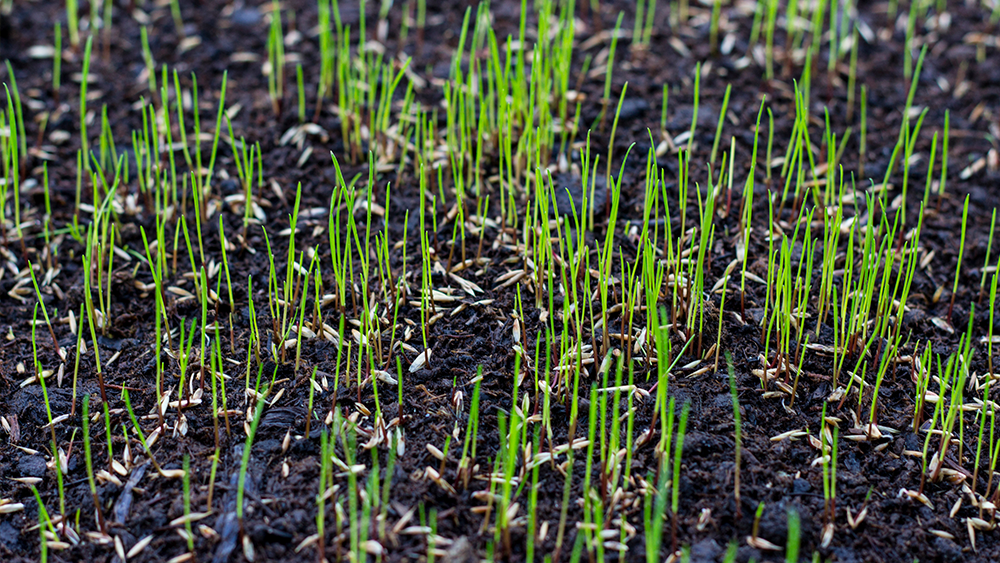
When Your Lawn is Newly Seeded:
- Water lightly, but frequently. Your first order of business is keeping the soil damp. The secret is being judicious and steady. Don’t water until the point of puddles, but don’t let the soil dry out either. Dry soil will kill the seeds’ germination process. The goal is to apply just enough moisture to soften the seeds’ outer layer, allowing them to sprout. Once seedlings are 2 inches high, you can begin watering less frequently, but for longer durations.
- Mow once the grass reaches 2 to 2.5 inches tall. Make sure the soil is dry to avoid compaction or the risk of creating damaging wheel ruts. For this first mow, the grass should be cut to 1½ to 2 inches, then allowed to grow to 2½ to 3 inches in height before mowing again. Repeat this process three or four times. After, the mowing height can be increased to 2½ to 3 inches.
- Apply fertilizer. Six weeks after germination, we like to apply ¾ to 1 pound of actual nitrogen per 1,000 square feet. (Actual nitrogen refers to the specific amount of elemental nitrogen in the fertilizer, as opposed to the total weight of the applied product.) We repeat the application in four to six weeks.
- Avoid herbicides. Applying herbicides to a newly seeded lawn can weaken or stunt grass seedlings and disrupt their root development. If weeds become a problem, product labels usually indicate when it is safe to apply an herbicide to a new lawn. Our applicators will ensure the most appropriate and safe product is chosen.
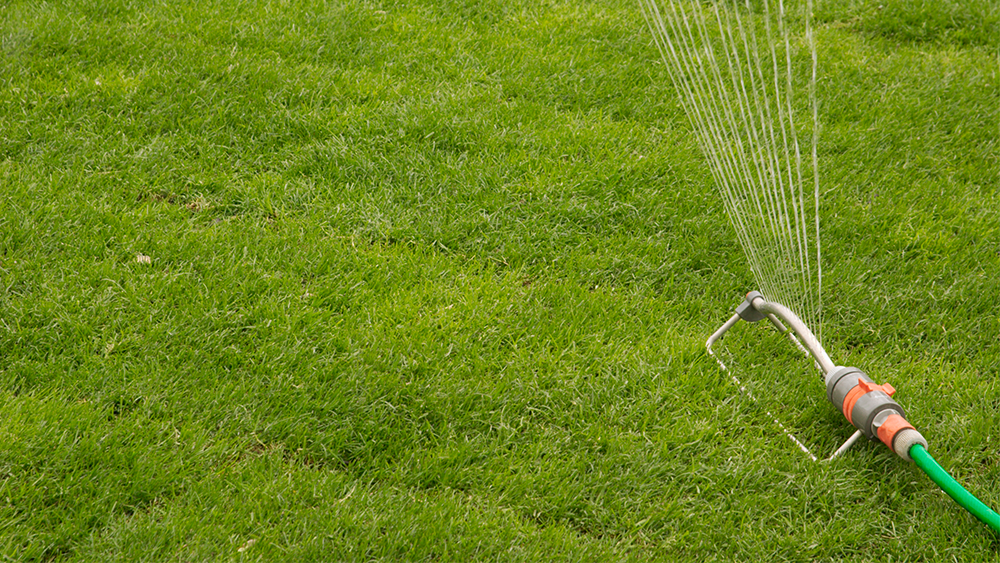
When Your Lawn is Newly Sodded:
- Water 2 to 3 times per day for the first two weeks. It’s best to water in short durations and adjust as needed, based on your climate. Warmer weather may require water more frequently, while lawns in cooler climates may be able to get by with less. The key is to wet the entire root zone. However, keep in mind that it’s only ½-inch deep, which means puddles and runoff can happy quickly. By the third week, you’ll be able to reduce the frequency of watering, but increase the duration.
- Check for root establishment. One of the things we also look for beginning around week three is root establishment, which can be tested by gently pulling up on the grass. If you feel resistance, the roots are beginning to grow into the soil. Until this happens, continue adjusting down the frequency of watering until the roots have grown into the soil and the lawn is being watered just once a day, three to four times a week.
- Don’t mow until the lawn is 3 to 4 inches tall. Sometime after the 3-week mark, and once the sod is firmly rooted, your lawn may be ready for its first mow. It should be 3 to 4 inches in height and not have been watered for 24 hours. This allows the sod to dry, which will prevent the creation of ruts. For this first mow, we recommend removing only the top ⅓ of the grass blade to minimize stress on the new sod.
- Begin fertilizing after a month. After installation, wait four weeks before beginning a regular fertilization schedule. In those first applications, the focus is on supplementing phosphorus to support strong root development. Adding too much nitrogen too early can result in an abundance of weak top growth.
With these tips, you’ll be well on your way to an envy-inducing lawn. To make the process truly effortless though, enlist the help of our experts. We’ll create a personalized program for your property, designed to help your lawn and surrounding landscape truly thrive. Get in touch to schedule your complimentary consultation.


