
The Secret to Terrific Turf
Dig Into... Turf Care



We’ve always thought landscape had calming properties, so when we hear someone say, “go touch grass,” we’re here for it. But what if your turf isn’t exactly the type you’d want to touch? If you’ve got bare spots, weeds, or discoloration, this guide is for you. We’re breaking down the turf care basics you need to know to finally achieve a lovely lawn.
1. Aeration for the Win
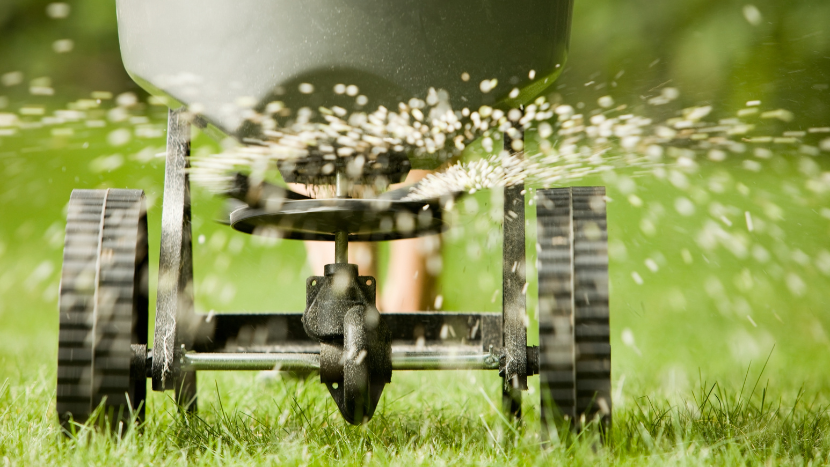
If you have compacted soil or a build-up of excessive thatch (that’s the layer of roots and stems that lies between your grass and the soil), you need to aerate. Drainage issues, thin grass, grass that struggles to grow and discoloration are all signs your lawn may need aeration.
Aeration is the process of poking holes into the soil to allow air, water, and nutrients to more easily penetrate. It also breaks up soil compaction, so roots can expand with ease. As an added benefit, the plugs that are removed in the process are left in the turf, where they decompose and enrich the soil.
Aeration is best completed in the spring or autumn and can be performed in conjunction with overseeding—a treatment in which grass seeds are applied to improve the density of the lawn. In fact, completing these two at the same time helps improve the end result. However, if 50 percent or more of your turf has been overcome by weeds, you may be better served by a turf renovation.
2. Mow in the Know
You’ve probably heard of the rule of thirds. Well, it applies to mowing, too. You should never remove more than 1/3 of the grass height at one time. Dramatic reductions in grass height cause stress, as it eliminates a large portion of the leaf surface used for photosynthesis.
For this reason, regular mowing is key. Mowing every seven to 10 days during the active growing season is a good rule of thumb. For most lawns, an ideal height is somewhere between 2 to 3 inches. Warm-season grasses, like Bermuda and Zoysia, tend to do best with a shorter length, whereas cool-season grasses, like Kentucky Bluegrass and Fescue, will be happier on the longer side. Keeping your grass at the right length will help it resist stress in the hottest months of the year and allow it to more easily crowd out weeds.
And for bonus points, don’t bag those clippings! Mulching mowers, like the ones used by BrightView, turn the clippings into a natural fertilizer that enriches your lawn and diverts waste from the landfill.
3. Fertilize the Right Way
Generally speaking, most turf will benefit from twice-a-year application of a slow-release fertilization. The exact timing depends on where you live, but generally, it’s somewhere around spring and fall. Before applying anything, however, it’s wise to get a soil test. Soil testing provides valuable insights about your lawn’s current pH and nutrient levels. This will ensure the fertilizer that’s applied gives your lawn just what it needs (and nothing it doesn’t). For example, high calcium may explain why your lawn has taken on a yellowish color, or why growth is stunted. Conversely, a lack of calcium could be causing leaf curling or die-back at the tips.
4. Win Against Weeds
All the strategies above will help you keep weeds at bay. However, there’s one more important piece to the puzzle and that’s pre- and post-emergent. For best results, you’ll need applications of both. Consider it a one-two punch.
Pre-emergent addresses weed seeds in the soil and prevents them from sprouting. This can be applied in the spring and fall. Consistency is key. Staying on a regular program will pay dividends in a healthier lawn. But what about weeds that have already germinated? Post-emergent herbicides will do the trick. Your landscape partner can apply a selective post-emergent, which will target specific types of weeds without harming the surrounding turf.
With these tips, your lawn will look greener than ever. For more helpful insights like these, be sure to subscribe to our Dig Into series. And to really take the guesswork out of caring for your turf, schedule a free consultation with one of our knowledgeable local teams. We’ll make it seamless, so you have more time for the things that really matter… like, touching grass.


