
Solutions to Common Soil Problems
Dig Into... how to troubleshoot



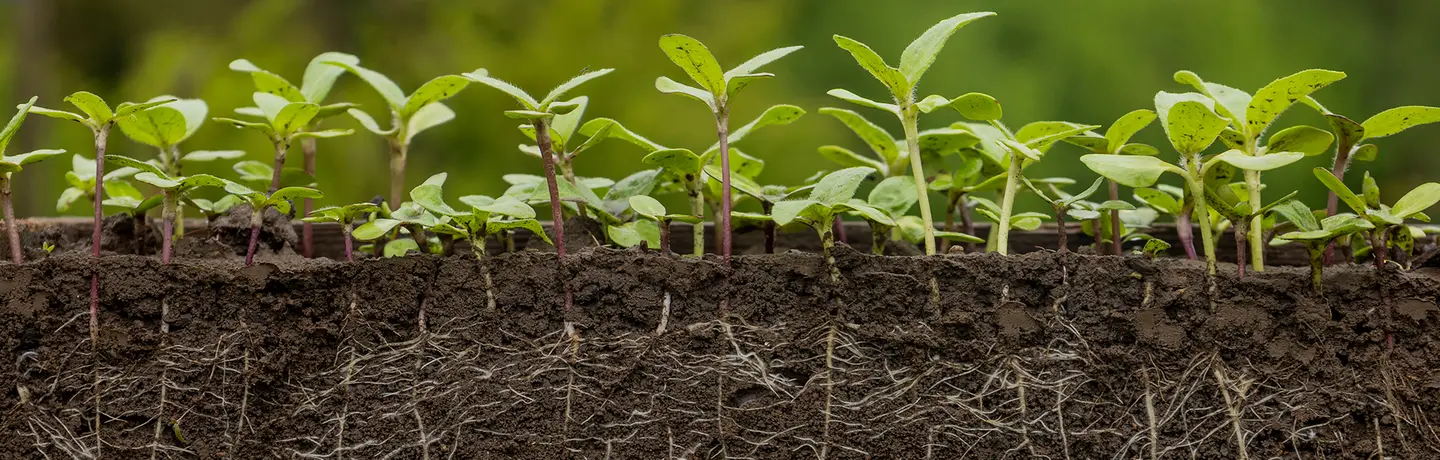
When it comes to landscape, we consider ourselves down-to-earth; that is, we never take soil quality for granted. Soil is the foundation of your landscape, not to mention a natural water filtration system and source of climate regulation. That’s why it’s so important to understand your soil type so you can best support the health of your plants and the environment. Get ready to get your hands dirty, because today we’re digging into how to troubleshoot the most common soil problems.
The Problem: High-Clay Soils
High clay soils are composed of small sticky particles that easily hold their shape if molded when wet. This soil type is dense and heavy, containing over 40% fine mineral particles. That makes it nutrient rich, but also incredibly hard to work with. You may also notice that drainage is poor due to the soil’s water retentive properties. Once it does eventually dry, the surface will appear hard and cracked.
Compaction is a huge concern with clay soils, especially because it can be problematic for root growth and the foundations of any structures it surrounds. The best way to combat this is by adding organic matter, such as compost, sphagnum peat moss, or aged manure to the soil. These amendments act as a physical barrier to break up the sticky, dense clay particles and should be worked in deeply using a shovel, digging fork, or rototiller for best results.
The Problem: Sandy Soil
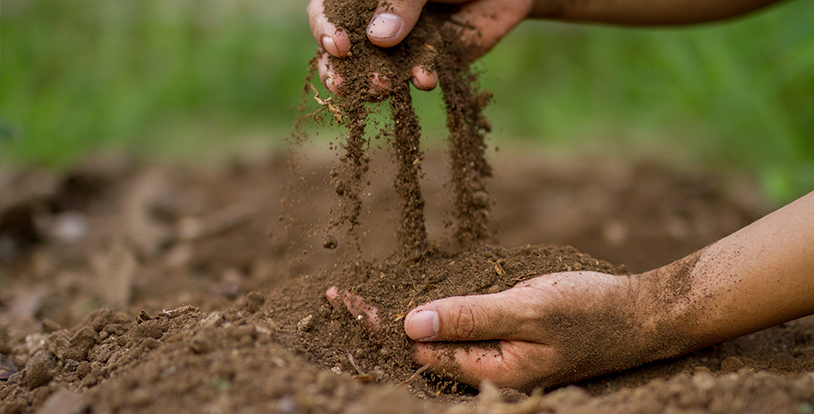
The opposite problem of high-clay soils is sandy soil. You can identify it by its large gritty particles, rapid warming, poor nutrient retention and quick drainage that leaves little water for plants.
Though sandy soil and clay soil couldn’t be more dissimilar, their solutions are the same: adding organic matter like compost, sphagnum peat moss, or aged manure. In a sandy soil, these amendments will slow water transit through the soil, giving plants more time to drink it up. Just like clay soils, it’s important to work the amendments deep into the soil.
The Problem: Soil pH
To set this one up, let’s take a quick trip back to science class. You may recall pH is a unit of measurement of acidity or alkalinity. A soil is said to be acidic if the pH is less than 7.0, while a pH over 7.0 is considered alkaline.
So, which one is better for your landscape? It depends on the plant. Knowing your soil pH will help you choose varieties that will thrive in your soil. For example, thyme, oregano and clematis all grow best in alkaline soil. Meanwhile, rhododendrons, azaleas, and blueberries prefer an acidic soil.
Finding out your soil pH is easy with a soil test. The results will even let you know if you need to correct an imbalance. Lime can be worked into the soil to raise the pH, whereas elemental sulfur would be added to lower it. Keep in mind the solution may need to be repeated regularly, as you’re not changing the environmental circumstances that caused the imbalance.
Your soil is a crucial building block for creating a beautiful landscape. Giving it a little TLC goes a long way toward cultivating above ground benefits. If you’re curious about your soil’s composition, or wondering why your landscape fails to thrive, enlist one of our knowledgeable local experts for a soil analysis. We can solve even the toughest soil mysteries, giving your landscape the missing link it needs once and for all.


