
Mulch or Decomposed Granite?
How to choose the right one for your desert landscape



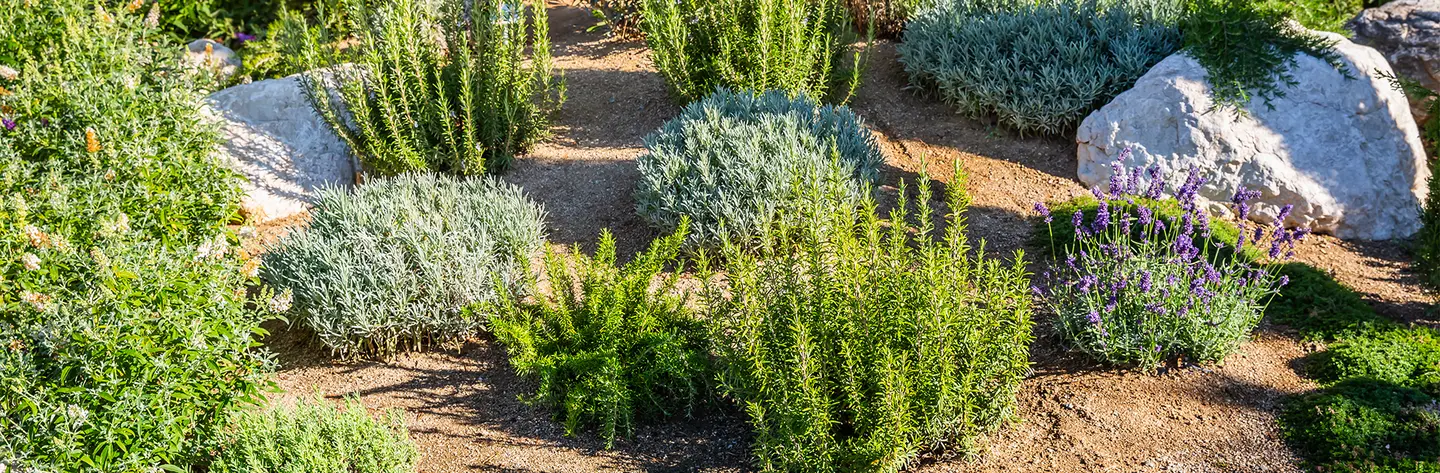
When it comes to having the desert’s best dressed soil, the biggest question is whether you’ll choose mulch or decomposed granite. Both are worthy options, but each has distinct advantages. In this guide, we’ll cover all the ground: explaining how to evaluate the pros and cons of each, so you can achieve the right look (and function) for your property.
What is wood mulch?
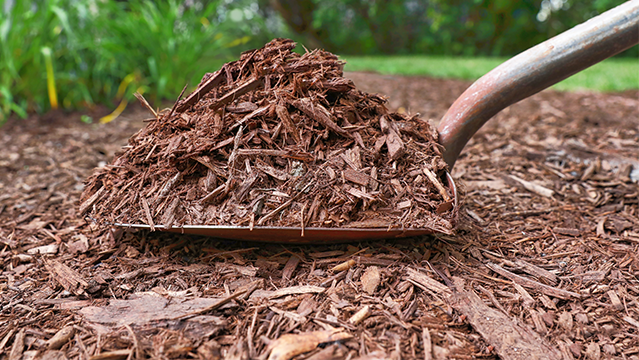
Wood mulch is created by grinding tree trimmings into woodchips. Then, it’s spread over the ground of your planting beds, ideally at a depth of 2 to 4 inches. Over time, the mulch will begin to break down, releasing nutrients into the soil. Unfortunately, that also means it needs to be periodically replenished to maintain a good layer over the soil.
What is decomposed granite?
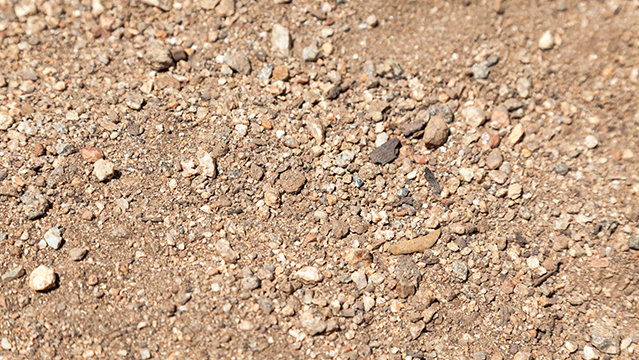
Decomposed granite is formed through the weathering of granite, creating a rocky mineral mulch that is smaller than gravel, but bigger than sand. When used for pathways and patios, decomposed granite is installed with a binder that helps it compact into an easily walkable surface. In landscape beds, it’s used without the binder as a mulch. Typically, decomposed granite is a reddish-brown color, but can also be found in gold, white, tan, and grey hues.
So, which is better for your landscape?
A lot depends on the conditions of the area where the decomposed granite or mulch will be applied. These questions will help determine which is right for you:
1. Does the area struggle to retain moisture or absorb a lot of heat?
Decomposed granite will retain more heat than mulch, which may cause your soil to run on the drier side. Mulch, on the other hand, can act like a sponge that gradually releases moisture during dry spells.
2. Are termites a problem in your region?
In some cases, mulch provides cover for termites who tunnel through the moist environment looking for food. Certain types of wood mulch, like cedar, can repel termites. Otherwise, consider decomposed granite, which will be less attractive to pests.
3. Will you be able to replenish mulch on a regular basis?
There’s no getting around it: over time mulch will need to be refreshed. In addition to breaking down, the color will also begin to fade in the hot desert sun. If replacing your mulch on a regular basis will be problematic, decomposed granite may be a better bet.
4. What is the aesthetic of your landscape?
Decomposed granite has a distinctive look that’s most at home in rustic, southwestern, modern, Mediterranean, and xeriscape landscapes. For more traditional landscape, mulch may be a better choice.
5. Is the area on a steep slope?
Mulch is more likely to be displaced by rain and won’t stay put on a slope.
6. Are you worried about the material tracking into buildings or water features?
Because decomposed granite is a crushed rock, it has some finer particles that may find their way into entryways and pools. However, this becomes less likely when the decomposed granite is mixed with a binder. Edging and retaining walls add another measure of protection for any type of soil cover.
To sum up the nitty gritty…
There’s no one right or wrong answer for a desert landscape; both mulch and decomposed granite can be great choices when used in the right applications. With the questions above, hopefully we’ve helped steer you closer to the right pick for you. For more help, get trusted advice from one of our knowledgeable experts. Contact us to be connected with your local team. And be sure to sign up for our Dig Into series, to get future tips like these delivered straight to your inbox.


