4 Ways Professional Snow & Ice Removal Mitigates Risk

4 Ways Professional Snow & Ice Removal Mitigates Risk Dig Into... Winter Risk Mitigation

Snow is a fact of life; liability doesn’t have to be. One of the best ways to protect your business from unnecessary risk is by hiring a professional and experienced snow & ice removal team. The benefits extend far beyond dependable service and communication. Let’s dig into the top four:

Reduce Liability & Personal Injury Risk

Icy and slippery stairs are a fall risk.
When your property isn’t cleared promptly and effectively, surfaces remain slick.

When your property isn’t cleared promptly and effectively, surfaces remain slick. Worse, if snow is allowed to become compacted, ice can form. And let’s not forget the risk hidden in plain sight: black ice. All lead to a higher chance someone will slip and fall. 

The best snow professionals combat this on two fronts: by applying deicers before the first snowfall begins, and by activating your property’s removal plan promptly. The latter is critical to uncovering hidden obstacles that could be a cause for trips, falls, and injuries.

Compliance with Local Regulations

Many cities and towns require properties to clear sidewalks within a certain amount of time—usually 24 – 48 hours—after snowfall ceases. Properties that aren’t in compliance are often subject to fines. 

Further, you don’t want to find yourself out of compliance with the Americans with Disabilities Act. The ADA requires properties keeps pathways, including ramps and parking spaces, clear and accessible for people with disabilities. Professional snow and ice removal providers take these requirements into account when creating your personalized removal plan, so it’s one less thing for you to worry about.

Protects Your Property

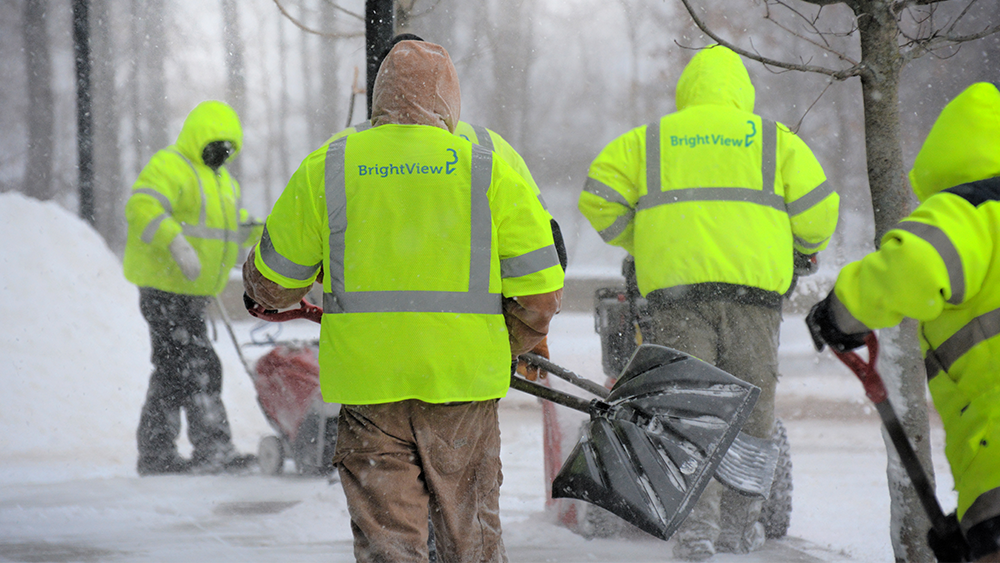
BrightView Snow Services Crew
We utilize the right-size equipment for each job to further lessen the risk of damage to your property.

This is another area where preparation begins long before the first snowfall. At BrightView, we install snow markers to identify curbs, fire hydrants, and other hidden obstacles. This ensures they’re visible to snowplow and equipment operators to prevent damage. We also conduct thorough site mapping, so all team members are clear on priority areas and potential obstacles. And we utilize the right-size equipment for each job to further lessen the risk of damage to your property.

Lessens Your Downtime

Every minute you must remain closed due to inclement weather is money lost. Professional snow and ice providers understand this and work tirelessly to get you back to normal operations.

This is why pre-planned response strategies are so crucial—because it enables crews to respond without delay. We also pre-position our teams so they’re able to rapidly deploy at the first opportunity. And we monitor storm progress 24/7 and communicate developments in real-time, so you’re always in the loop. 

Selecting a professional snow and ice removal partner is the single best way to safeguard against a range of risk in the winter months. If you’re just beginning your search, check out our Smart Guide to Purchasing Snow Services for more helpful tips on selecting the right partner and snow contract for your needs. Or get in touch with one of our local experts, who will be happy to walk you through your options.

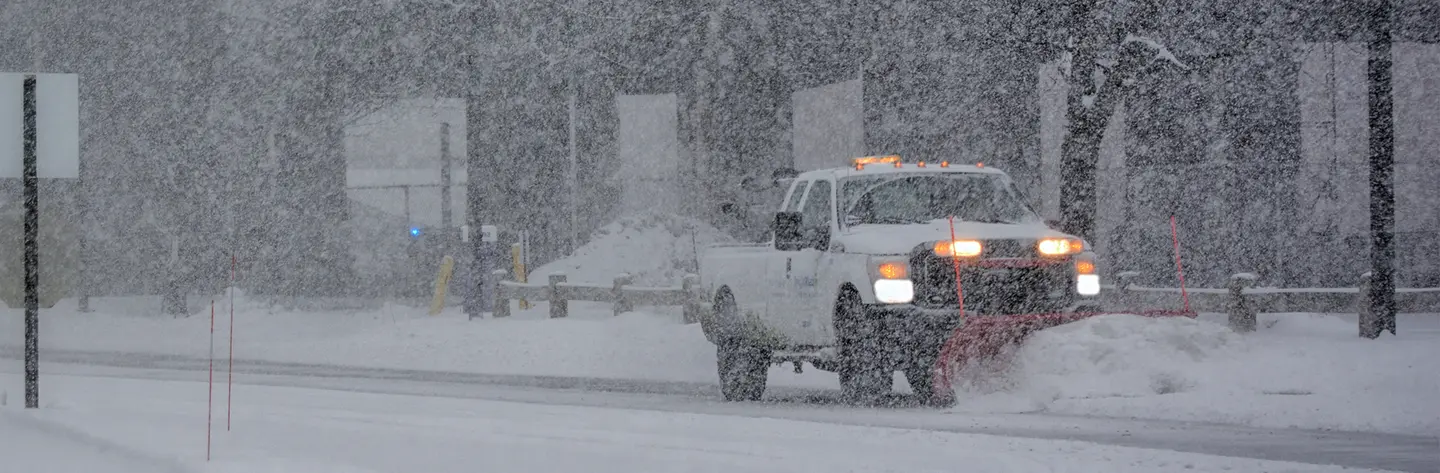
BrightView Snow Plow in Snow Storm

How to Care for a New Lawn

Newly Seeded or Newly Sodded? Dig Into... How to Care for a New Lawn

You got a new lawn? Congratulations! Now, let’s get down to the business of keeping it alive and helping it thrive. Whether it’s newly seeded or newly sodded, read on for the steps you need to make your green investment a healthy and lush success.

Newly Seeded Lawn
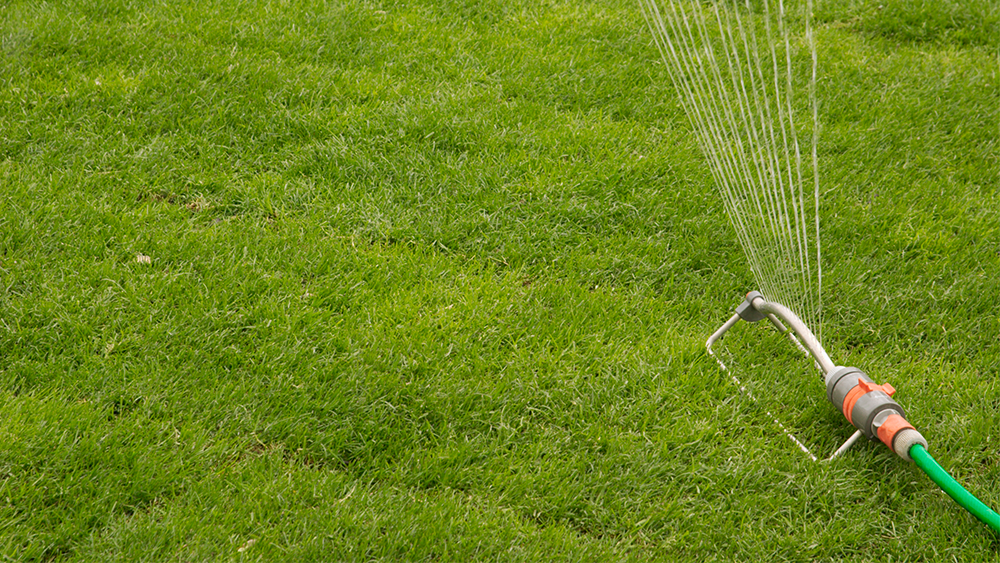
Don't water to the point of puddles, but don't let the soil dry out either.

When Your Lawn is Newly Seeded:

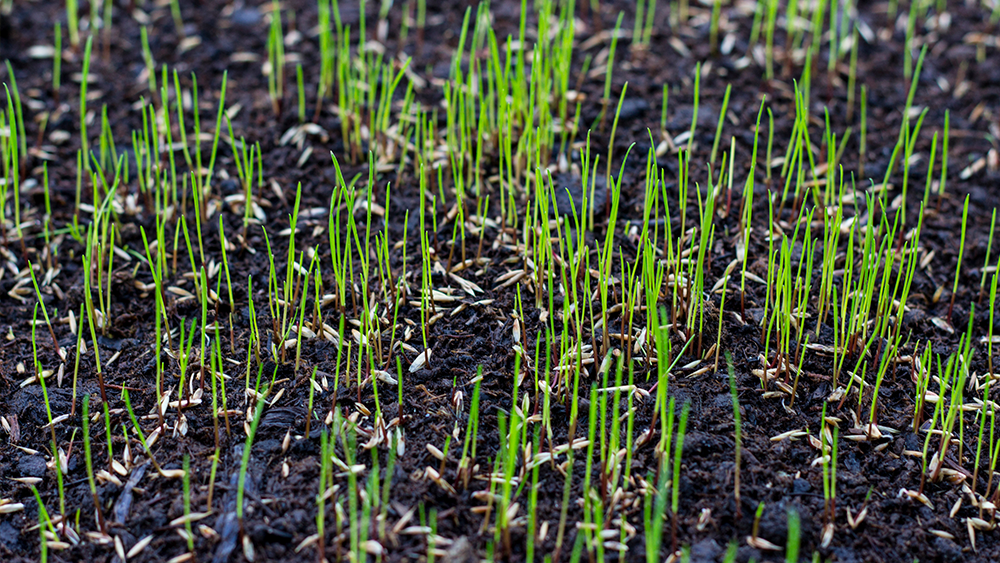
  1. Water lightly, but frequently. Your first order of business is keeping the soil damp. The secret is being judicious and steady. Don’t water until the point of puddles, but don’t let the soil dry out either. Dry soil will kill the seeds’ germination process. The goal is to apply just enough moisture to soften the seeds’ outer layer, allowing them to sprout. Once seedlings are 2 inches high, you can begin watering less frequently, but for longer durations.
  2. Mow once grass reaches 2 – 2.5 inches tall. Make sure the soil is dry to avoid compaction or the risk of creating damaging wheel ruts. For this first mow, the grass should be cut to 1.5 – 2 inches, then allowed to grow to 2.5 – 3 inches in height before mowing again. Repeat this process three or four times. After, the mowing height can be increased to 2.5 – 3 inches.
  3. Apply fertilizer. Six weeks after germination, we like to apply 0.75 – 1.0 pound of actual nitrogen per 1,000 square feet. (Actual nitrogen refers to the specific amount of elemental nitrogen in the fertilizer, as opposed to the total weight of the applied product.) We repeat the application in four to six weeks.
  4. Avoid herbicides. Applying herbicides to a newly seeded lawn can weaken or stunt grass seedlings and disrupt their root development. If weeds become a problem, product labels usually indicate when it is safe to apply an herbicide to a new lawn. Our applicators will ensure the most appropriate and safe product is chosen.
Newly Sodded Lawn
By the third week, you’ll be able to reduce the frequency of watering, but increase the duration. 

When Your Lawn is Newly Sodded:

  1. Water 2-3x per day for the first two weeks. It’s best to water in short durations and adjust as needed based on your climate. Warmer weather may require water more frequently, while lawns in cooler climates may be able to get by with less. The key is to wet the entire root zone. However, keep in mind that it’s only ½ inch deep, which means puddles and runoff can happy quickly. By the third week, you’ll be able to reduce the frequency of watering, but increase the duration. 
  2. Check for root establishment.  One of the things we also look for beginning around week three is root establishment, which can be tested by gently pulling up on the grass. If you feel resistance, the roots are beginning to grow into the soil. Until this happens, continue adjusting down the frequency of watering until the roots have grown into the soil and the lawn is being watered just once a day, three to four times a week.
  3. Don’t mow until the lawn is 3-4 inches tall. Sometime after the 3-week mark, and once the sod is firmly rooted, your lawn may be ready for its first mow. It should be 3-4 inches in height and not have been watered for 24 hours. This allows the sod to dry, which will prevent the creation of ruts. For this first mow, we recommend removing only the top 1/3 of the grass blade to minimize stress on the new sod. 
  4. Begin fertilizing after a month. After installation, wait four weeks before beginning a regular fertilization schedule. In those first applications, the focus is on supplementing phosphorus to support strong root development. Adding too much nitrogen too early can result in an abundance of weak top growth. 

With these tips, you’ll be well on your way to an envy-inducing lawn. To make the process truly effortless though, enlist the help of our experts. We’ll create a personalized program for your property, designed to help your lawn and surrounding landscape truly thrive. Get in touch to schedule your complimentary consultation.
How to care for a new lawn

How Long to Run Each Irrigation Zone

How Long to Run Each Irrigation Zone Dig Into... The art of irrigation

Irrigation is both an art and a science, and when it comes to determining how long to run each irrigation zone, no truer words have been spoken. That’s because a handful of factors go into making the determination; it’s a whole lot of math and a little bit of intuition. Let’s break it down.

First, What Are Irrigation Zones?

Irrigation smart controller technology
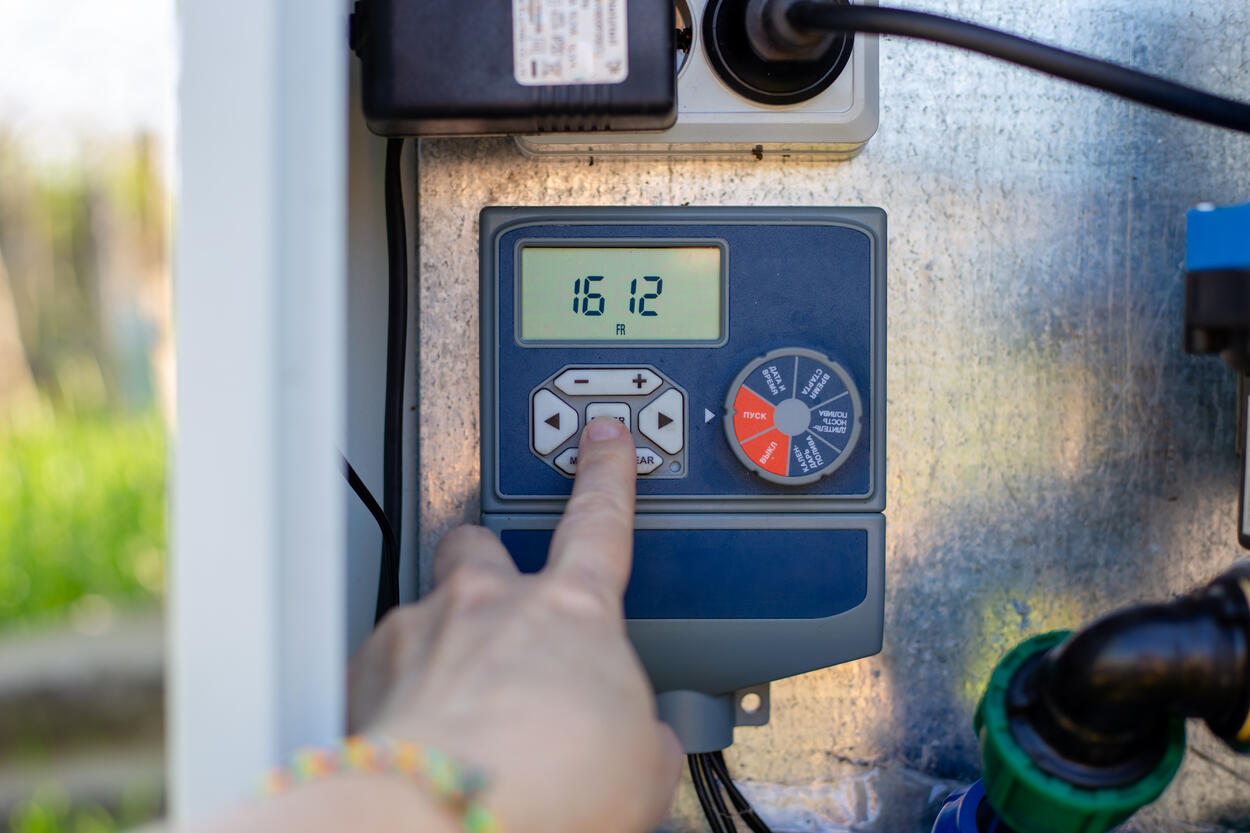
Smart controllers and rain sensors can help with application rates and water needs for your landscape.

Irrigation zones are a specific area of your landscape served by a single control valve in your irrigation system. Ideally, plants are grouped together by similar water needs (this is called hydrozoning) to prevent over- or underwatering. Then, the zone is fitted with appropriate sprinkler heads and scheduled to run at a duration that will meet the hydration requirements of that section.

From Inches to Gallons

Generally, water recommendations for plants or lawns are given in inches. For example, Bermudagrass typically needs 1 to 1.5 inches of water per week, while most rose bushes require 1 to 2 inches in the same timeframe. That’s easy to understand when we’re talking about rainfall, which is also measured in inches, but how does that translate to irrigation, which is usually measured in gallons?

Here’s an important conversion to remember: an inch of water equals approximately 0.62 gallons per square foot. Once you make the conversion, you’re ready to translate the result to your irrigation run times.

Know Your Run Rate

Now, here’s where things get less straightforward. Because different sprinklers use different methods to apply the water—like drip versus spray—the application rate will vary based on the type of irrigation you have installed. Take, for example, a fixed spray nozzle, which will apply between 1.75 to 2 inches of water in an hour, assuming proper spacing. Contrast that with stream rotators, which will apply 0.4 to 0.65 inches of water per hour. A fixed spray nozzle running for 30 minutes will apply almost an inch of water, while the stream rotator running for the same 30 minutes will apply only ¼-inch water. All that to say, you could have vastly different run times across your zones.

Consider Other Factors

But don’t stop there. This is where the art and intuition come in. As you may have noticed, application rates and water needs come in ranges. It may take some experimentation and observation to really dial in which end of the range makes the most sense for you. Additional factors, such as slopes and soil quality, can also impact run time. And of course, when it rains, you may need to shorten or hold on watering altogether. That’s where smart controllers and rain sensors can help.

Thankfully, you don’t have to become an irrigation expert to get your run times dialed in. We’ve got them on staff!  We’ll remove the guesswork, saving you money on your water bill, improving your plant health, and giving you more time to focus on what really matters. Contact us today.

Water irrigation management

Why You Shouldn’t Wait for Symptoms in Your Plants

Why You Shouldn’t Wait for Symptoms in Your Plants Dig Into... Proactive plant health care

Yellow leaves, wilting, and brown spots are all bad news. But what you might not know is that by the time you spot these symptoms, the optimal window to act could have passed. Permanent problems—like damage to the vascular or root systems—may have already taken hold. Let’s dig into why proactive plant health care saves headaches and money.

What You Can’t See Might Hurt You

Those visible signs we mentioned aren’t the first indication of trouble; they’re actually the last result of internal damage. That’s because plants will use energy reserves and make metabolic or osmotic adjustments to try to tolerate the stress. As a result, they’ll stop growing and have compromised defense mechanisms. When you finally see the outward signals, they were likely caused by stressors that occurred months ago.

Getting to the Root of the Issue

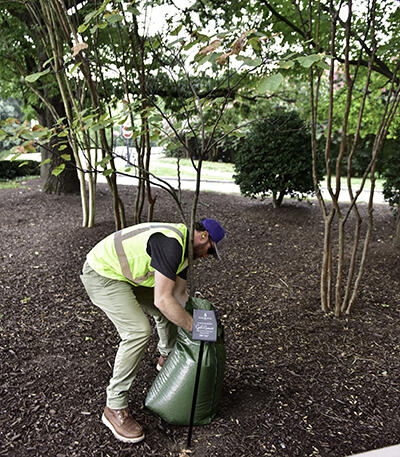
Tree Bag/Gator/Diaper
In addition to being better for the health of your plants and budget, plant health care supports the health of the environment, too.

While some issues are caused by insects and diseases that attack a plant above the surface, other problems originate below ground. Poor soil is another enemy of plant health, and like the examples above, can be brewing for some time before it rears its head in a visible fashion. Soil compaction, pH issues, and infertility can also appear as slow or stunted growth as plants struggle to get the nutrition they need. Yet all can be easily identified with regular soil testing, a solution that is simple and inexpensive.

The Best Bang for Your Buck: Plant Health Care

Simply put, reactive care is more expensive. It often involves intensive treatments, frequent biological or chemical applications, and the proper removal of diseased or dead plant material. Worse, in situations of advanced decline, it may mean the only option is a complete renovation.

That makes plant health care a relative bargain. Think of it like a self-fulfilling prophecy. When you keep up with a regular plant health care regimen, plants have better nutrient uptake. And in the event of an infection or pests, healthy plants take to treatment better than stressed ones. Best of all, plant health care isn’t elaborate or exorbitant to implement. The key components are quite simple. They include: 

  • Regular monitoring to look for subtle changes in bark or leaf color and early signs of pests or disease
  • Soil management, like regular aeration, fertilization, and keeping up with mulch applications to reduce weeds, regulates temperature and nourishes the soil
  • Integrated pest management, specifically proactive, targeted treatments to prevent infestations
  • Proper watering, ensuring your irrigation system is operating efficiently, and applying water at the rate needed for each zone to avoid the dreaded wet-dry cycles that stress plants

In addition to being better for the health of your plants and budget, plant health care supports the health of the environment, too. By keeping your landscape in top shape and staying abreast of soil health, you’ll need fewer chemical applications and harsh pest controls and only apply targeted amounts of fertilizer when tests indicate it’s needed. Now that’s good news!

Ready to create your personalized plant health program? Get in touch

Dig Into: Why You Shouldn't Wait for Symptoms

Extraordinary Sports Venue Makeovers

From Vision to Game Day: Extraordinary Sports Venue Makeovers Dig Into... Stunning Stadium Transformations

If you’re an avid sports fan, you likely have vivid memories of thrilling performances by some of your favorite athletes. But what you might not know off the top of your head are some of the amazing stories behind creating the venues where those feats took place. At BrightView, we’ve had the pleasure of transforming numerous iconic stadiums, restoring storied fields to their original glory and converting others to serve new purposes in record time. Read on to dig into a few of our favorite mind-blowing transformations.

Rickwood Field BrightView Sports Turf
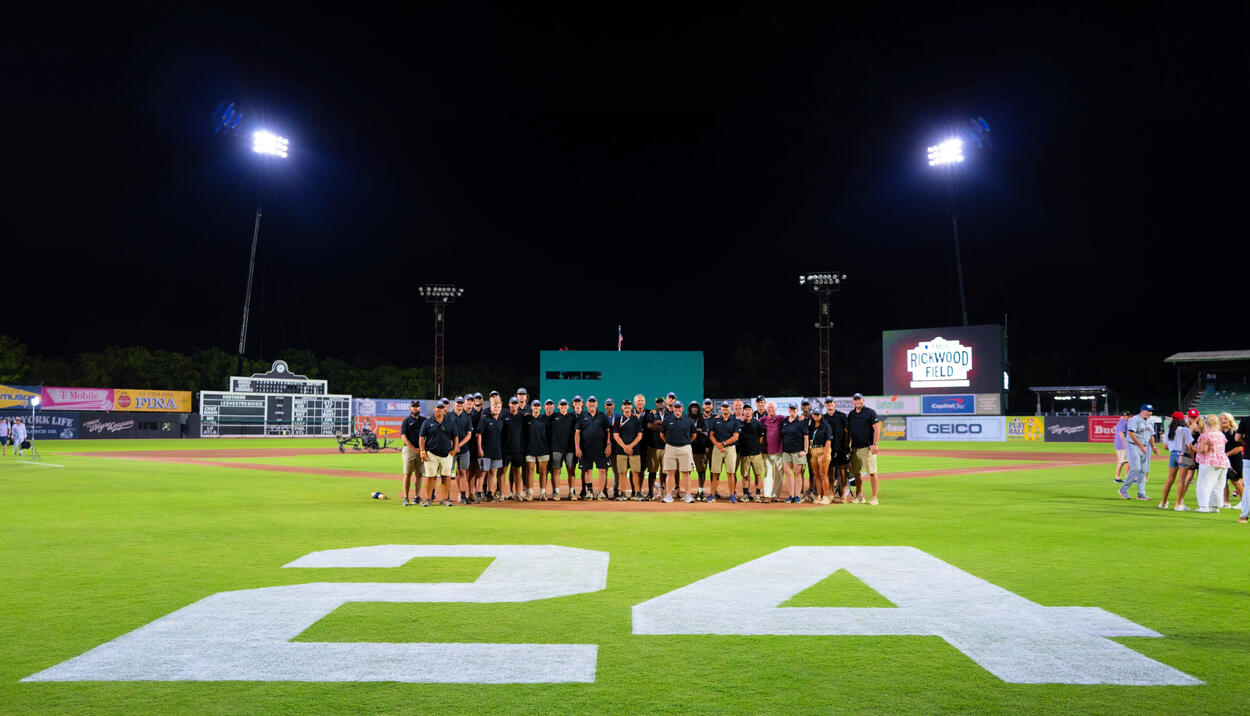
Rickwood Field has seen almost continuous use for more than 100 years and had plenty of wear and tear before BrightView came in and transformed the field while keeping history and legacy intact.

Rickwood Field

Restoring the Oldest Professional Ballpark in the Country

The oldest professional baseball stadium in the country has seen its share of stars. Dating back to 1910, Rickwood Field was home to the Birmingham Black Barons of the Negro Leagues. It hosted the likes of Babe Ruth, Ty Cobb, Yogi Berra, Jackie Robinson, and Willie Mays. So, when the MLB announced a special game paying tribute to Rickwood Field’s legacy, BrightView was enlisted to renovate the entire playing surface, bringing it up to modern standards.

The feat entailed removing 5,000 tons of material, including excavating 100 years of chalk from both foul lines, which had solidified into a 10-inch-thick-mass. After, 6,000 tons of sand, clay, and warning track were brought in, along with 120,000 square feet of a new Bermudagrass, Tahoma31, for the infield and outfield. The project was completed just in time for the San Francisco Giants vs. St. Louis Cardinals game, the first ever regular season MLB game to be held at the historic field.

Bristol Motor Speedway

From Speedway to World-Class Baseball Field

Can a speedway be turned into world-class regulation-sized MLB field in just 30 days? You bet. BrightView made it happen at the Bristol Motor Speedway.

BrightView and its partners turned the speedway’s asphalt track and infield pit lane into 124,000 square feet of AstroTurf Diamond Series and infield dirt. The transformation required nearly 18,000 tons of gravel to level the field. Over the course of a month, the team temporarily removed pit walls, select signage and lights, Sunoco fuel tanks, and half of the Goodyear building. And it was all completed in time for a Cincinnati Reds and Atlanta Braves match-up, the first American or National League game to be held in Tennessee.

SoFi Stadium soccer pitch CONCACAF
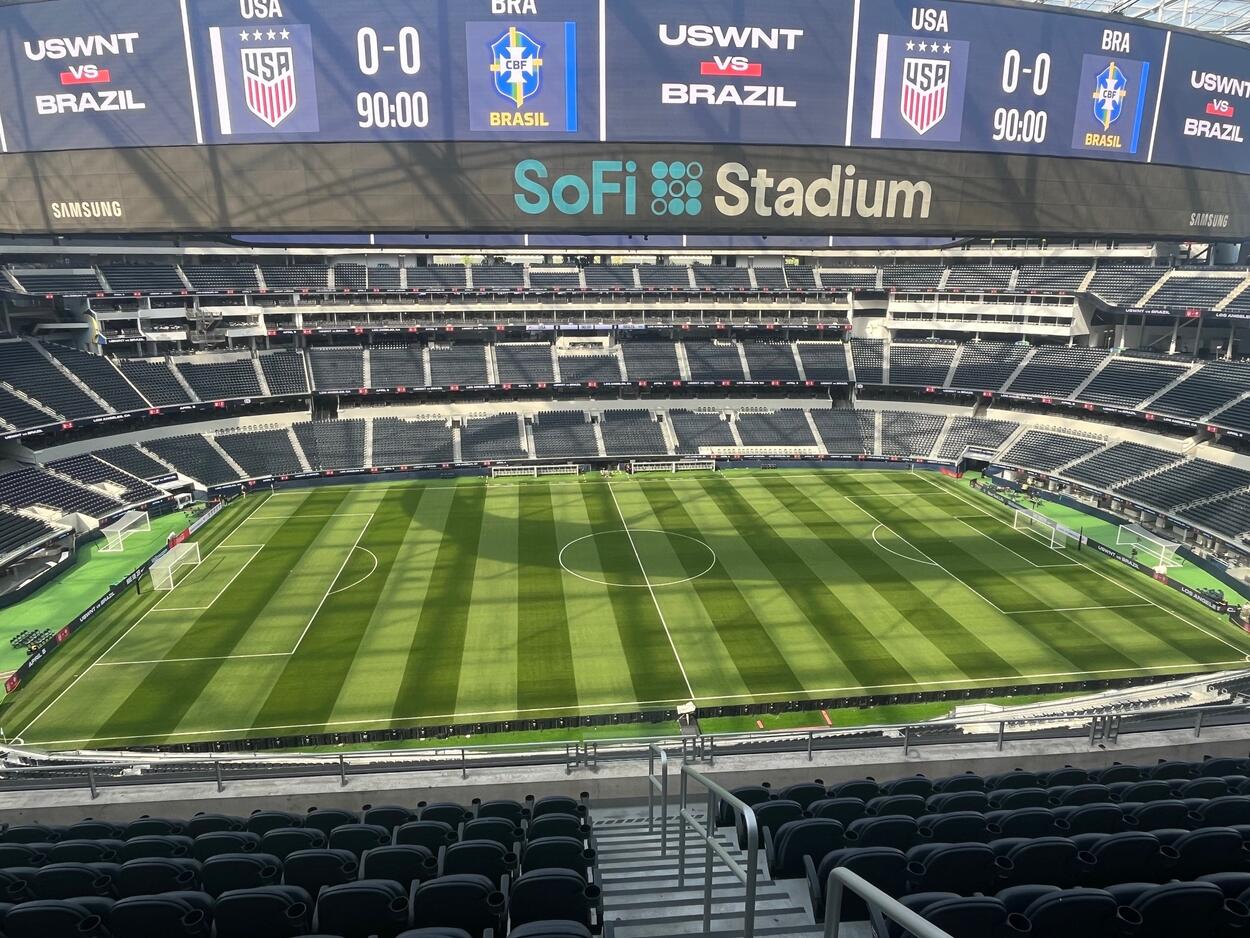
BrightView converted SoFi Stadium's football field to a soccer pitch in under a month for the Concacaf Nations League Finals in 2025.

SoFi Stadium

World-Class Soccer Pitch in Under a Month

You probably know SoFi Stadium as the home of the Los Angeles Rams, but you may be surprised to learn it’s also served as a soccer venue, too.

BrightView helped meticulously convert SoFi’s artificial turf field to a regulation soccer pitch for the 2025 Concacaf Nations League Finals, featuring 40 national teams from across the Americas. The 80,000 square feet of natural turf required was grown nearly a year in advance in Washington, then harvested and sent to California. BrightView covered the existing artificial turf with a flooring layer, followed by Permavoid, an innovative stormwater control structure, and finally 6 inches of USDA sand-based rootzone. Once the final match was complete, the entire pitch was removed within 14 days.

Field of Dreams

Bringing the Timeless Movie to Life

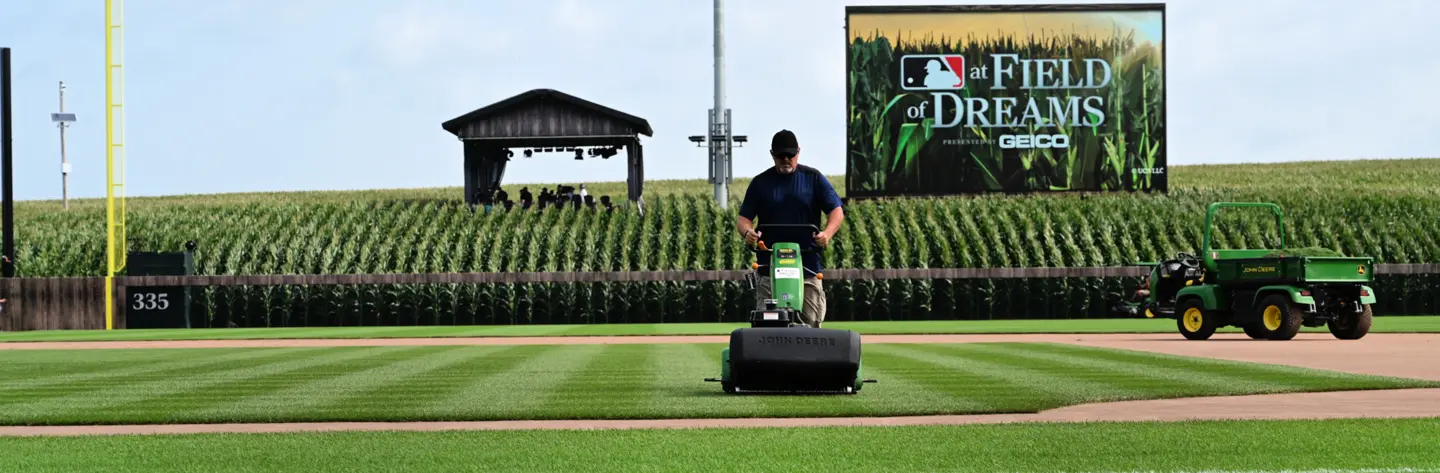
Field of Dreams came out in 1989, but in 2021, the dream was reignited when BrightView helped build an MLB stadium in the famous Dyersville, Iowa, cornfield. Construction began in 2019 and required digging and moving 30,000 cubic yards of soil to level the field amidst the unique challenge of “corn sweat”—which makes humidity particularly intense. However, the result was well worth the effort. Today, fans can walk along a pathway through the cornfields, past the original Field of Dreams movie site, before arriving at the newly-constructed park.

From cornfields and speedways to historical sites, these amazing stories are just the beginning of our Sports Turf roster. For more fascinating projects, click here. Or, contact us to start writing your own game-changing story.


Field of Dreams © Universal City Studios LLC. All Rights Reserved.

Stunning stadium transformations

Don’t Let Your Parking Lot Be the Weak Link

Don’t Let Your Parking Lot Be the Weak Link Dig Into...Parking lot pointers

Parking lots are more than just a place to come and go. They’re the first and last impression for visitors to your business. Let’s make it a pleasant experience. Here’s how to ensure your parking lot truly serves you well.

Be Picky with Plants

Parking lot islands take a beating, so it’s important to choose plants and trees that are extra tough and well-adapted to your climate. Native plants generally don’t need to be babied and are an especially good choice if your parking lot islands aren’t irrigated. Trees are nice for shade, but be careful with deciduous or fruiting varieties, which can create a mess (or worse, stain cars and concrete).

Parking Lot Pointers - Convert That Turf
If you have turf in a narrow parking lot island, consider a conversion to hardier plant material.

Convert that Turf

This one deserves its own category. If you have turf in a narrow parking lot island, consider a conversion to hardier plant material, as mentioned above. Not only does turf require a lot of water to maintain, but it doesn’t take kindly to foot traffic or car exhaust either.

Drip, Don’t Spray

Speaking of parking lot islands, if yours are irrigated and use spray nozzles, consider converting to drip. Raised parking lot islands with spray often suffer from runoff, which is a waste of resources and precious budget dollars. Plus, it puts you at risk for issues with your asphalt and curbs, as the runoff can damage both over time.

Make Visibility a Priority

Safe parking lots minimize risk by maintaining a clear flow of traffic and safe clearance. The best way to mitigate risk is to:

  • Keep bushes and trees trimmed and tidy to maintain good visibility. 
  • Ensure prompt removal of snow, ice, and landscape debris
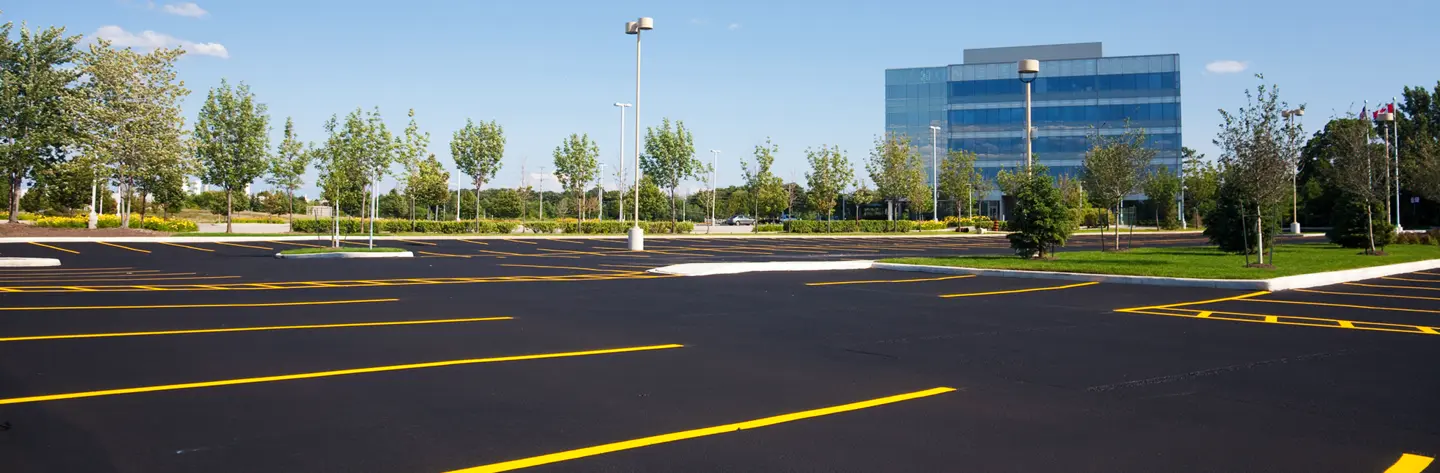
  • Re-stripe your parking lot every couple years to keep lines crisp

Streamline Your Parking Lot Maintenance

BrightView can provide both your parking lot maintenance and your landscape services, making the management of your exteriors stress-free. We provide regular sweeping, striping, and maintenance, and conduct routine inspections so weakened areas, cracks, and potholes don’t go unnoticed. Plus, with our snow and ice removal services, you truly can enjoy comprehensive care year-round from a single, trusted provider. Schedule a free consultation to see what’s possible.

Dig Into - Large CTA
Parking Lot Pointers

4 Reasons Why You Need Plant Health Care

4 Reasons Why You Need Plant Health Care Dig Into... Plant Healthcare

A lush landscape is the picture of health. And if that’s your goal, it’s time to give your plants a check-up. Dig into plant health care to find out what it is, and why it’s the prescription your landscape needs now.

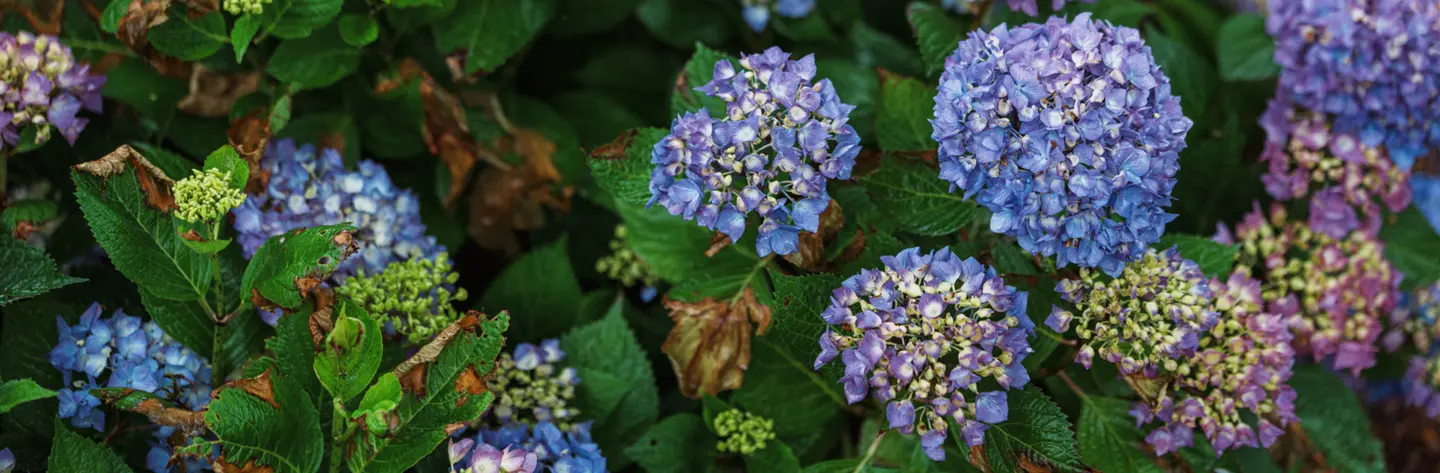
Purple and Blue hydrangeas
Just like you need a certain amount of water each day, your plants have specific needs, too.

What is Plant Health Care?

Plant health care is a comprehensive approach to ensuring your landscape’s vitality. It takes into account all the factors that could influence the health of your landscape, such as soil compaction, disease, watering, pests, and more.

What Does Plant Health Care Do?

Simply put, plant health care is an investment in the longevity and appearance of your landscape. Plant health care achieves this by:

1. Helping Your Landscape Get Its Vitamins and Minerals

Soil testing enables us to literally look beneath the surface of a problem to see what’s really going on. It tells us whether the soil needs amendments to correct deficiencies or adjust the pH to meet your plants’ optimum levels.

2. Ensuring Your Landscape Makes the Cut

Regular pruning isn’t just for shaping. It also allows us to remove diseased plant material and maintain good spacing. This ensures all your plants are getting proper sunlight and helps prevent non-beneficial pests from taking up residence.

3. Making Sure Everyone Stays Hydrated

Just like you need a certain amount of water each day, your plants have specific needs, too. This can vary from one plant to another. Overwatering, underwatering, or applying water in the wrong way each comes with its own set of problems. Plant health care ensures the right watering techniques are used for each plant.

4. Addressing What’s Bugging You

If you’ve got unwanted guests hanging around your landscape (read: pests), plant health care will give them the boot. Plant health care does this in a few ways: through proactive monitoring to catch problems early, timely application of controls, and preventative measures. Your program is tailored to you and can include organic or non-organic pesticides, depending on your preferences. The best part of plant health care is that it’s flexible and cost-effective. Your plan evolves with your landscape and helps prevent costly problems down the line. It’s easy to make plant health care part of your landscape maintenance. Simply give us a call and set up your free consultation.

Dig Into - Large CTA
Plant healthcare review.

9 Reasons to Choose BrightView for Golf Course Maintenance

9 Reasons to Choose BrightView for Golf Course Maintenance Dig Into... Golf

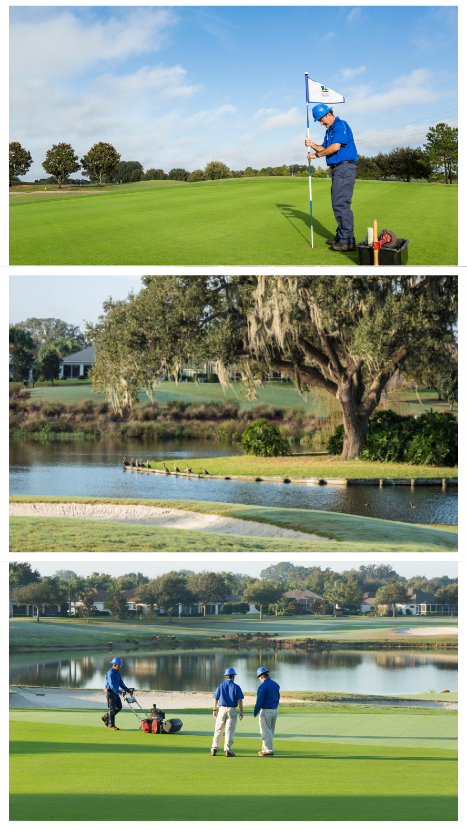
You might be surprised to learn that BrightView has been maintaining golf courses across the country for more than 40 years. In fact, we have a specialized team of golf course maintenance experts—including agronomists, operations experts, and golf course and landscape architects—all dedicated to the art and science of creating top-notch course conditions. Go behind the scenes with these nine facts.

We use our large scale purchase capabilities, streamlined administration technologies, technical skills, and top-level industry connections to produce up to 10 percent annual savings while improving player experience.
We use our large scale purchase capabilities, streamlined administration technologies, technical skills, and top-level industry connections to produce up to 10-percent annual savings while improving player experience.

1. We’re like a golf course coach

Partnering with BrightView isn’t outsourcing your golf maintenance in the traditional sense. You maintain control of your club, while we focus on boosting course conditions, increasing player satisfaction, and improving your bottom line. We assume employment responsibility for the crew and superintendent, who remain onsite as your dedicated course maintenance staff. The only difference is now they’re surrounded by an extended team of experts typically beyond the reach of individual clubs.

2. We create a customized agronomic plan for every course we serve

We conduct diagnostic testing onsite annually. Then, our agronomists use the information to develop a fertility, pest/weed control, and cultural program completely tailored to the course. No two programs are the same.

3. Our clients get an agronomist on speed dial

Our agronomic experts visit each client multiple times per year, but if something emergent pops up in the interim, our agronomist is on-call 24/7.

4. We can provide interest-free financing for capital improvements

Yes, you read that right. In addition to helping courses plan for future capital renovations and improvements to mitigate disruption of play and the impact to budget year-over-year, we help make needed updates possible sooner by providing interest-free financing.

5. Our purchasing power also helps clubs keep more capital in their pocket

Because we’re the largest landscape management company in the United States, we have the best purchasing power in the industry. We pass that benefit along to our clients to reduce the cost of maintenance materials and equipment. And speaking of equipment, we’re even able to purchase existing equipment from a client to use for their benefit, giving them more cash on hand.

6. Our clients can get access to the latest and greatest innovations before anyone else

We often offer opportunities to participate in field trials for new turf varieties, fertilizer technologies, and plant protectant chemistries, giving you a competitive edge.

7. In addition to agronomic excellence, we also help clubs achieve their operational best

We have management and operations experts on staff to assist with implementing best practices in safety, efficiency, and efficacy for day-to-day work and larger projects. We also offer administrative systems and technology that minimize paperwork and the amount of time your superintendent is stuck behind a desk. And finally, we offer ongoing training for your superintendent and crew, so they can operate at their best, too.

8. Partnering with us for golf course maintenance can yield up to 10-percent annual savings

Our purchasing capabilities, ability to troubleshoot agronomic problems as they arise, and our proprietary work planning process all contribute to better course quality and cost-efficiency for our clients.

9. We’ve got a wide network of support that can jump in, in good times and bad

When natural disasters or severe weather events strike, we’re able to call upon our national footprint to bring in additional crews to help you get back on your feet sooner. And when it comes to projects that extend beyond the scope of your course—say maintenance for the HOA, or landscape construction at the clubhouse—we’ve got the capabilities to handle that, too.

If you enjoyed this quick 9-hole round, check out our additional golf maintenance resources, including tips and news, here, and contact us to get the ball rolling.

Dig Into - Large CTA
BrightView Golf Course Maintenance

How to Complete a Landscape Project On-Time and On-Budget

How to Complete a Landscape Project On-Time and On-Budget Dig Into... Development

If you’re over landscape construction cost overruns and delays, this article is for you. Finishing a project on-time and on-budget isn’t a lucky break; it should be a standard expectation. So, how can you vet potential partners to determine who will actually get the job done right? Here are the three capabilities to dig into before you sign on the dotted line.

Pre-Development: Create a Clear Path 

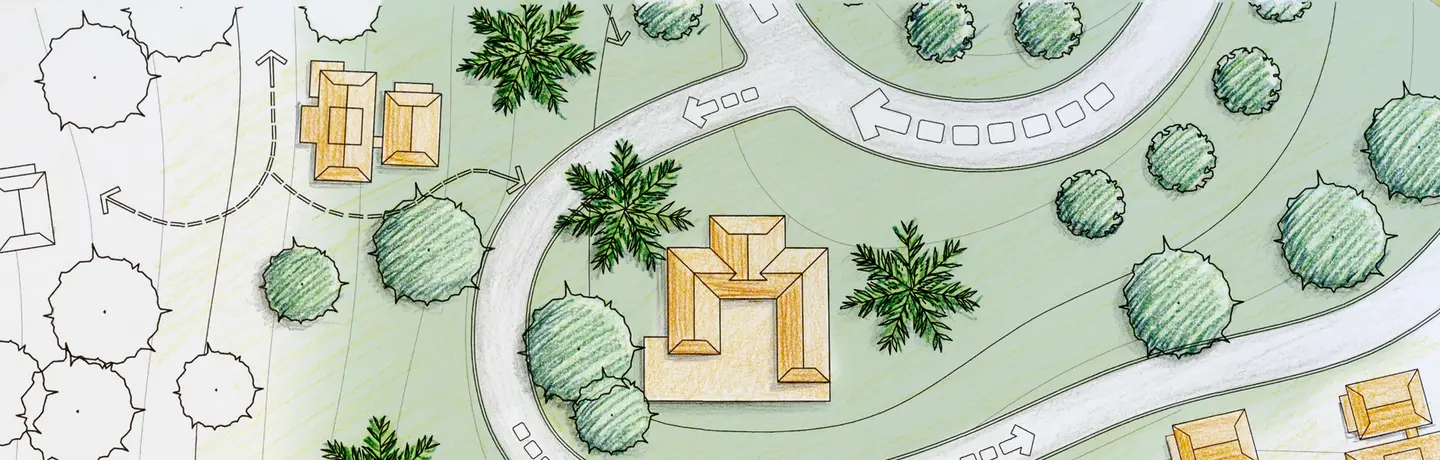
Dig Into Landscape Development Services
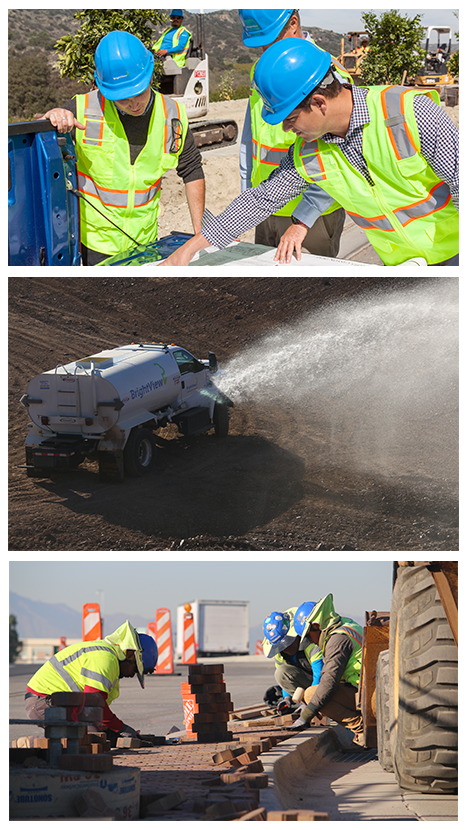
From hardscapes to softscapes, our talented team and collaborative process will deliver on your professional landscaping project, grounded in construction and maintenance realities.

There’s a lot to consider before you can break ground, but with pre-development services a good landscape development partner will leave no stone unturned. They should ensure:

  • Designs fall within the city’s overall plan, development, and zoning requirements;
  • Local benefit is justified; and
  • Consideration is given to pedestrian and traffic impact, environmental impact, and utility consumption.

This is why working with a company that has a track record of landscape construction management can make all the difference in preventing costly delays and mistakes. Not only do pre-development services make the process less stressful, but it also demonstrates to local authorities and decisionmakers you’re working with a trusted, knowledgeable entity. 

Project Management: Put a Plan in Place 

Project management is the antithesis of jobsite chaos, heading off resource and material availability issues before they can delay your project or compromise quality. Hallmarks of good project management include:

  • Outlining key milestones and timelines for each activity;
  • Weekly progress reports; and
  • Constructability review during the concept phase to ensure feasibility of the design.

Surprises are great in many respects, just not on your jobsite! Engaging a landscape development partner that is skilled in project management keeps everything on-track, from start to finish.

Landscape Construction: Show Me the Track Record

It’s important to feel confident the craftspeople and specialists working on your jobsite have extensive experience. A qualified landscape development partner should have a portfolio of past projects that demonstrates their proficiency. Some key indicators of a qualified partner include:

  • The ability to work in a wide variety of capacities, from general contractor to subcontractor;
  • A reputation for installing healthy softscape and well-executed hardscape; and
  • Experience executing technically challenging pool and water features.

Ensuring you’ll be working with well-trained, competent professionals is critical to avoiding costly rework or repairs down the line.

Finding these qualities in a landscape development partner is possible. Look no further than BrightView. With a simple “get it done” approach, we never compromise on our commitment to doing right by our clients, even when it means going the extra mile. Get in touch to discuss how we can help meet your projects’ goals.

Dig Into - Large CTA
Dig Into Development

The Must-Have Maintenance Checklist

The Must-Have Maintenance Checklist Dig Into... Maintenance

There’s more to good landscape maintenance than just “mow-and-blow.” A comprehensive approach to landscape care is key to maintaining a consistent appearance and avoiding costly problems down the line. So, what services are a “must” for your landscape maintenance program? This checklist will help you dig into the details.

Lawn Care

Landscape Maintenance Checklist
With its own distinctive features and lifecycle, your landscape becomes part of your visitor's experience. Our 22,000 employees apply their expertise in tree care, sustainable plantings and unique feature design to your property.

In addition to clipping, edging, and blowing the grass, your lawn will benefit from regular treatment with the following:

  • Pre-emergent to prevent weeds
  • Fertilizer to fortify growth, making your lawn more resistant to disease, pests, and weeds
  • Core aeration, roughly every one to two years, to avoid soil compaction that makes it harder for water, air, and nutrients to reach the roots of your lawn

Bed Maintenance

Ornamental beds need regular attention, too.  A good landscape care program should include a plan for weeding, pruning, mulch, and fertilization at regular intervals.

Weed & Pest Management

Proactive treatment can spell the difference between a minor nuisance and a major problem. Weed and pest management has come a long way, and today there are a number of organic solutions that can be integrated as a regular component of your maintenance program.

Irrigation

With many regions facing increased water restrictions, ensuring your irrigation system is in top form is more important than ever. Regular inspection by an irrigation expert can help you avoid costly leaks and repairs by catching and remedying problems early. Plus, an optimized irrigation system can effectively maximize the application of every droplet, so you can do more with less.

Tree Care

Generally, trees under 15 feet tall can be cared for by your regular landscape maintenance crew; anything taller and it’s time to call an arborist. A certified arborist and experienced tree crew are able to provide structural pruning that ensures the safety of your tree and surrounding people and property. They can also prescribe fertilizer applications that reach the deep roots of mature trees, growth regulators that prevent encroachment, and pest and disease treatment.

Storm Preparedness & Response

Fallen branches and debris resulting from severe storms can compromise the safety of your property. That’s why it’s important for your landscape partner to prepare a storm preparedness and response plan. The plan should include pruning trees in advance of storm season to reduce wind resistance and outline a plan for restoring safe passage to your property after a storm, prioritizing main points of entrance.

Exterior Maintenance

Finally, don’t forget about the exterior maintenance that keep your property safe and tidy, like power washing sidewalks and walls, plus parking lot sweeping, sealing and striping.

Together, these services represent a comprehensive landscape maintenance plan. And, as you may have noticed, many go hand-in-hand: such as fertilizing your lawn after a core aeration for better absorption or making storm preparedness part of your broader tree care plan. That’s why having a partner who offers all of these capabilities is crucial for making your landscape care seamless. Luckily, at BrightView, we can handle all of the above (and then some!). Contact us for a free consultation to see how we can make your landscape care stress-free.

Dig Into - Large CTA
Dig Into Maintenance
Subscribe to Dig Into